HAKOM New Technologies Day: Security as an Integral Component of Digital Systems Development
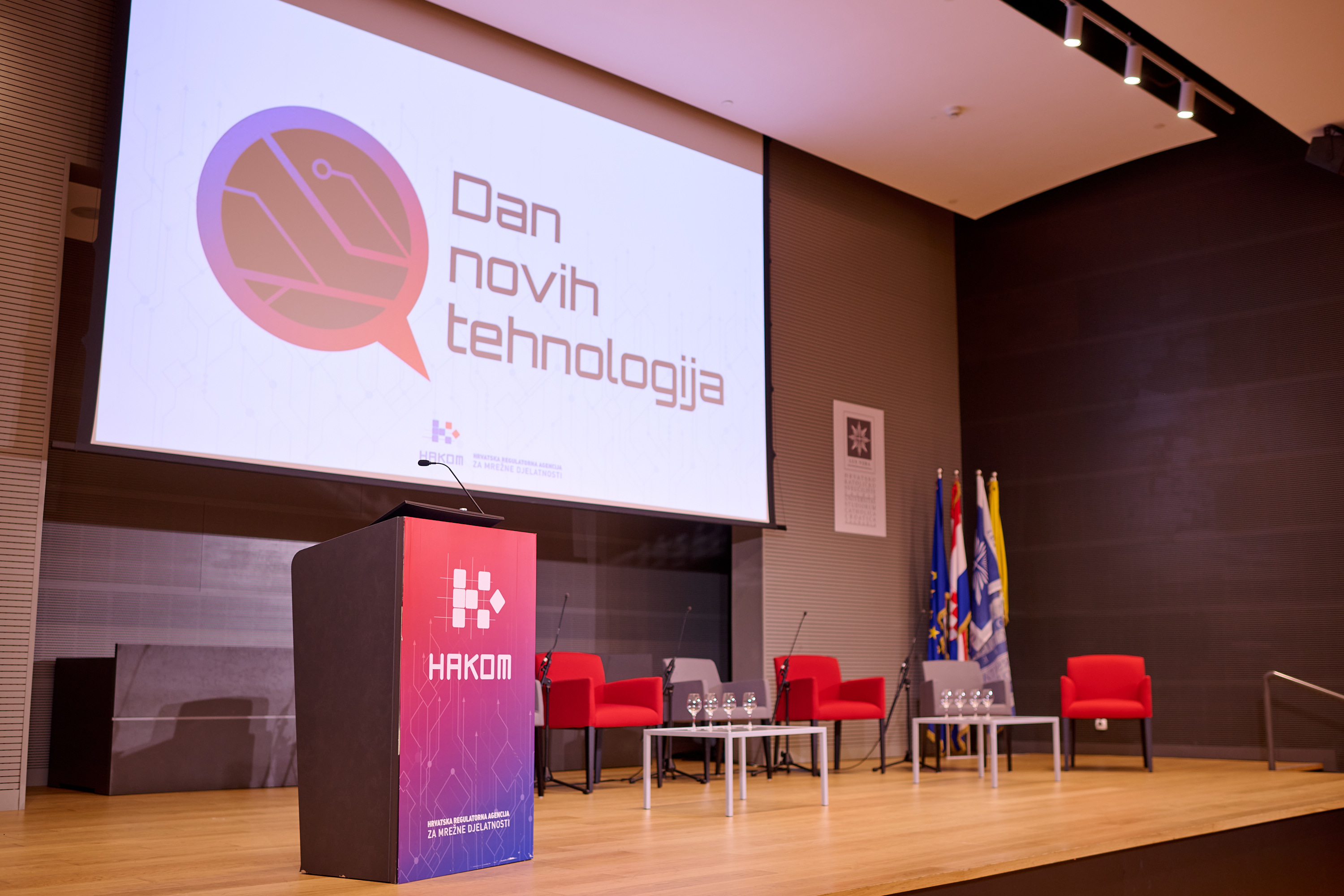
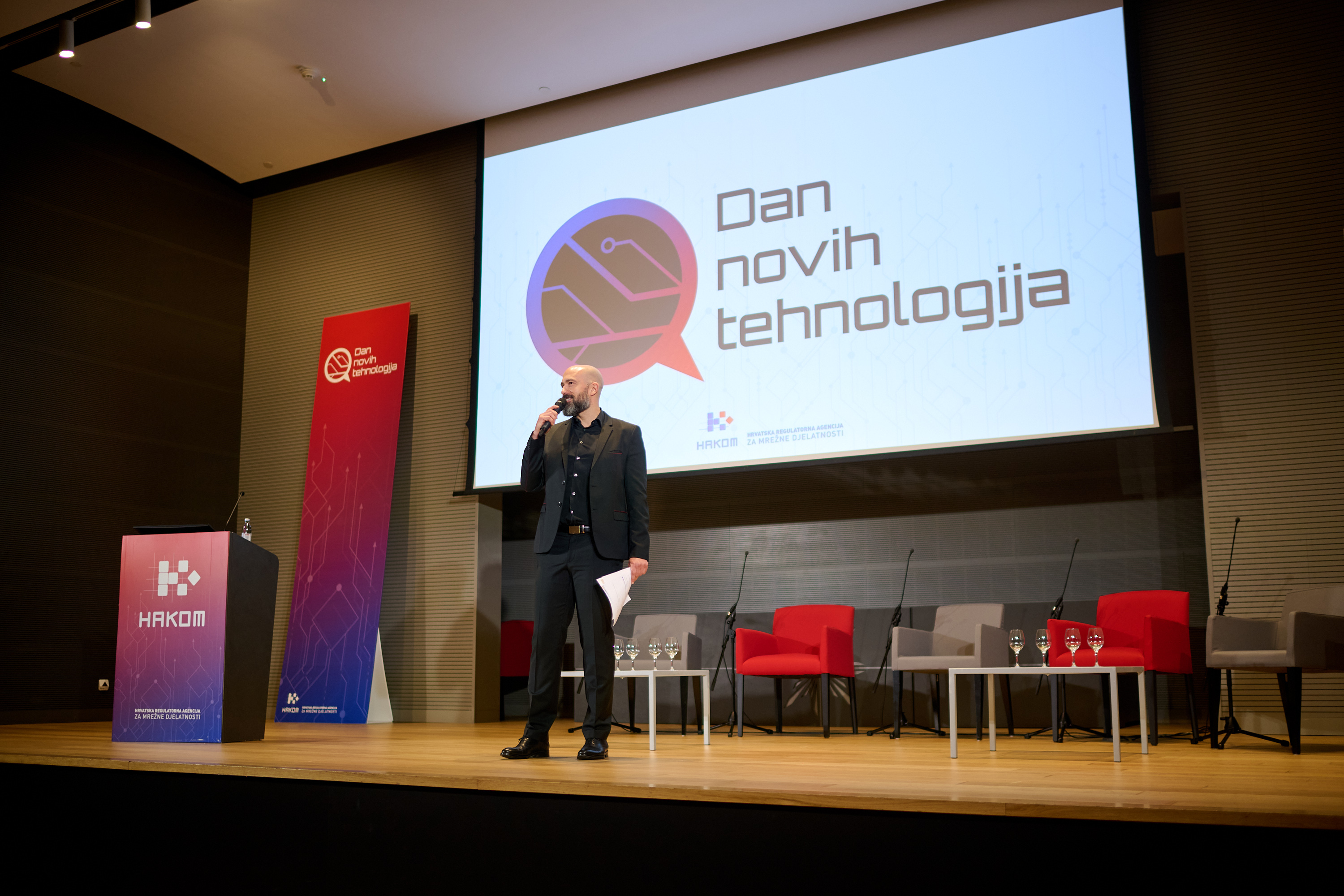
ZAGREB, 21 April 2026 - The seventh New Technologies Day conference was held at the Catholic University of Croatia in Zagreb, organised by the Croatian Regulatory Authority for Network Industries (HAKOM).
Once again, the conference brought together experts in electronic communications, digital technologies and cyber security. Students from the XV Gymnasium (MIOC) and students from the Faculty of Electrical Engineering and Computing also participated, with the aim of promoting STEM disciplines among young people.
The focus of this year’s edition was on cyber security and private 5G networks, while six thematic presentations also explored the use of drones and artificial intelligence in agriculture
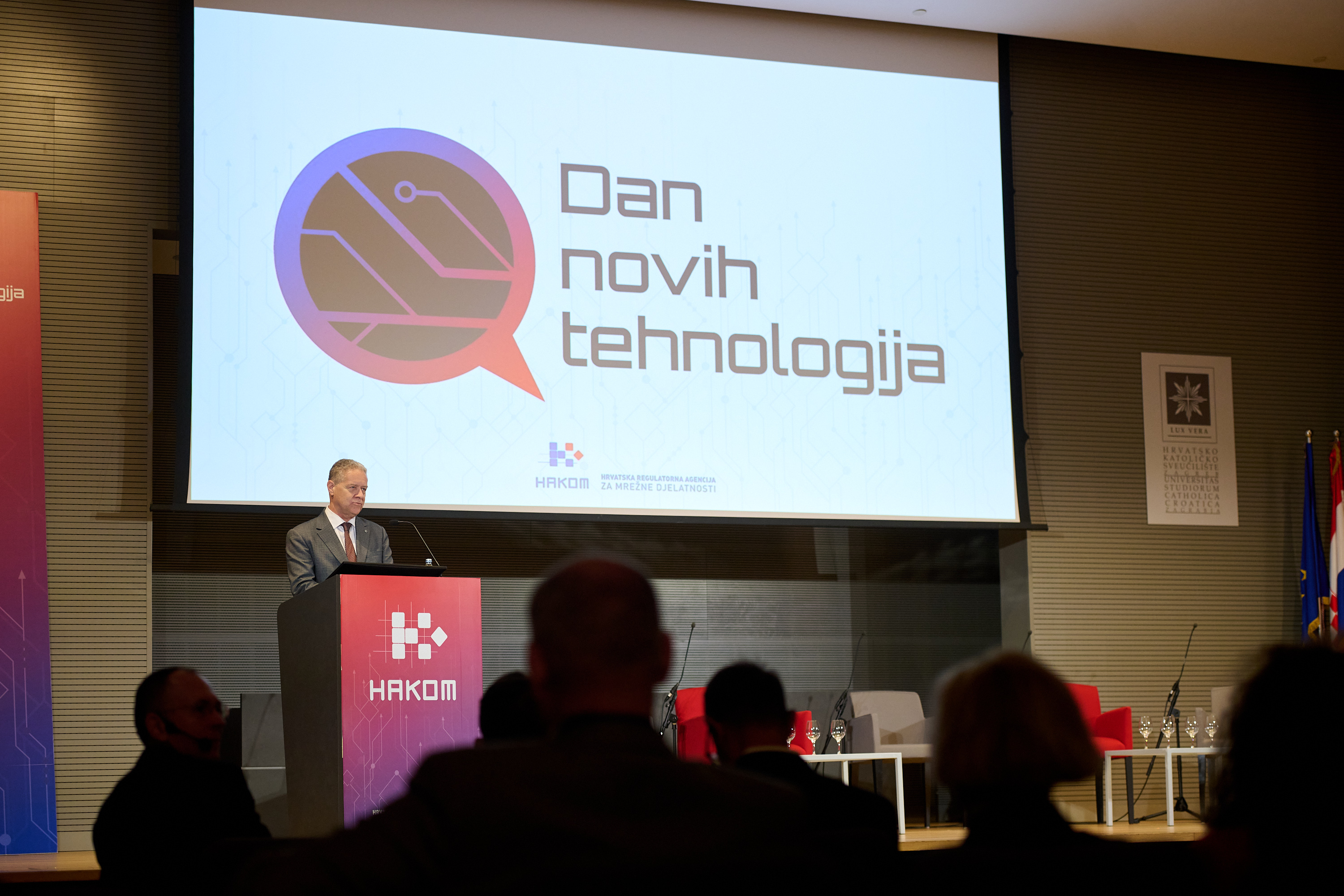
The conference was opened by Tonko Obuljen, President of the HAKOM Council, who emphasised the importance of fostering dialogue among regulators, industry representatives and the academic community, as well as actively involving pupils and students in discussions on the development of emerging technologies.
“Within its statutory remit, HAKOM is also responsible for implementing obligations arising from the Digital Services Act. In the coming period, we also expect to assume additional responsibilities related to other European legislative frameworks in the digital domain,” said Obuljen, inviting participants to exchange experiences and strengthen further co-operation.
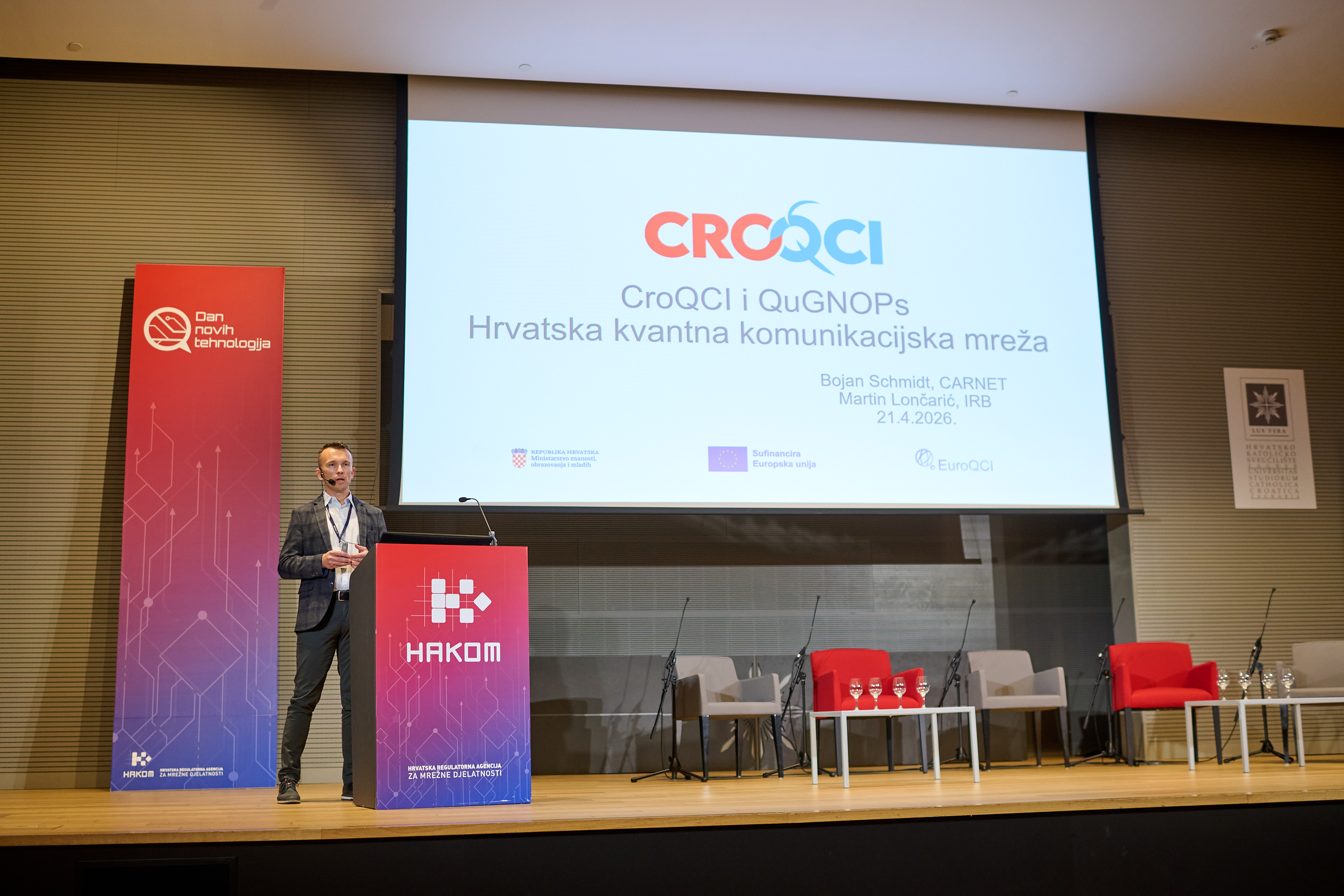
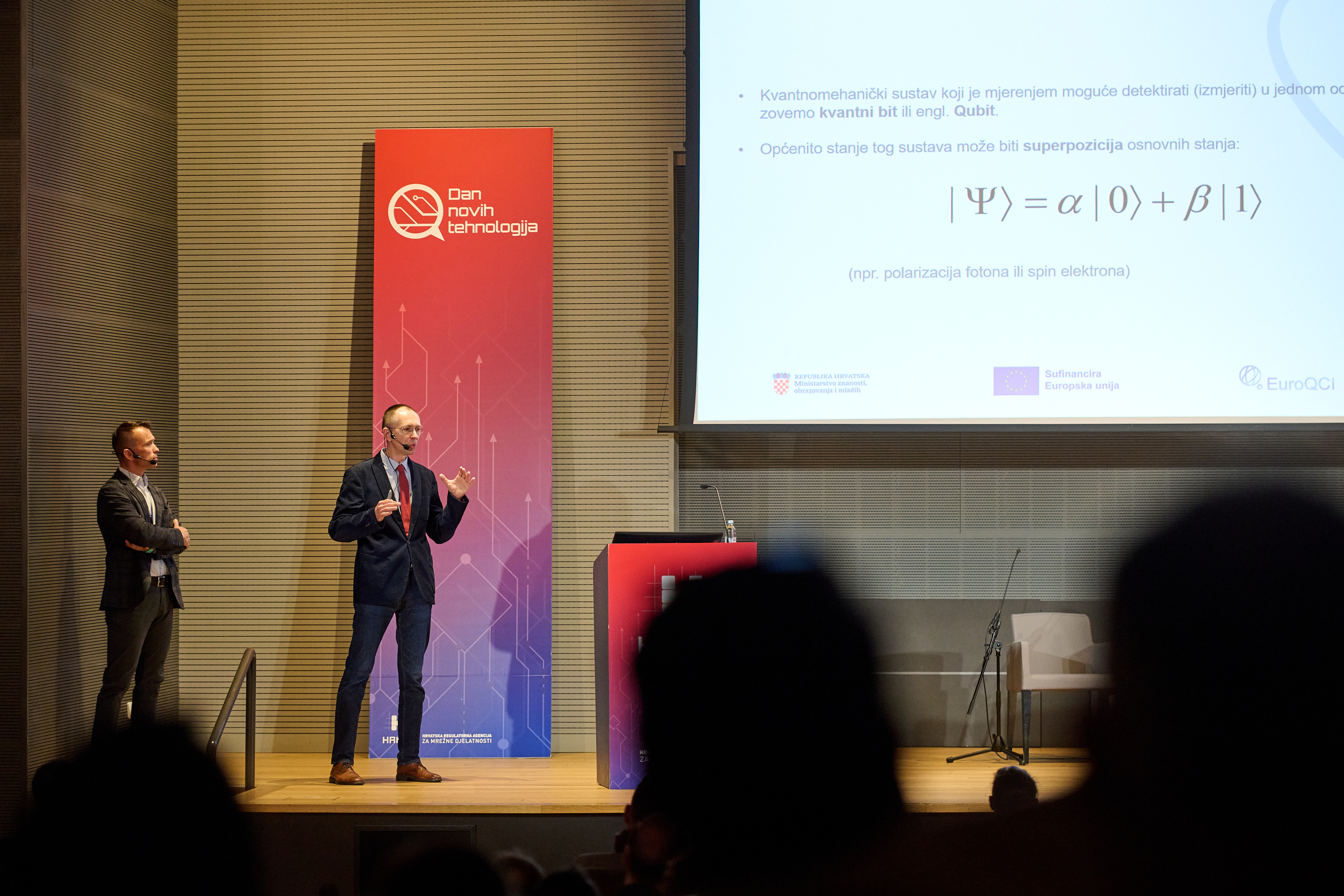
The introductory presentation on the Croatian quantum communication network was delivered by Bojan Schmidt from CARNET and Martin Lončarić from the Ruđer Bošković Institute. They presented the CROQCI project, which forms part of a broader European initiative to develop quantum communication infrastructures, as well as the QuGNOPs project, aimed at further developing the national network and integrating it with future European systems.
It was highlighted that an experimental quantum communication network and the associated optical infrastructure have already been established in Zagreb. This forms the basis for its further expansion and upgrading, and contributes to strengthening national capabilities in the field of cyber security.
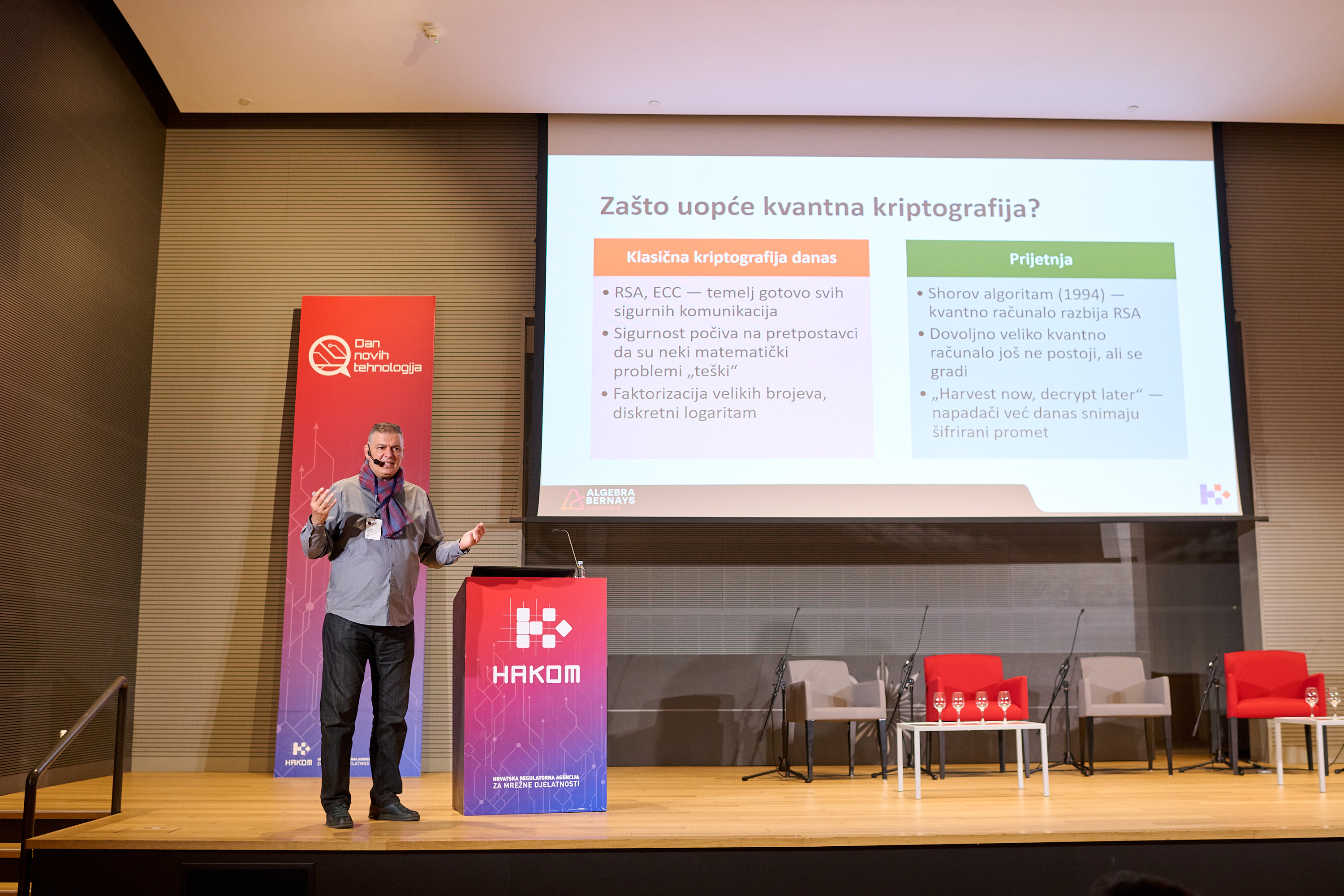
Security challenges related to quantum communications were addressed by Zlatan Morić, Head of the Cyber Security Department at Algebra Bernays University. In his presentation, he drew attention to the distinction between the theoretical security of quantum communications and the security of real-world systems, which depends on implementation methods, devices, and integration with existing infrastructure.
“Quantum technology does not eliminate the need for cyber security. It addresses one specific problem, while issues such as authentication, system management, protection of end devices and users remain just as important as before. Security is not a property of the technology itself, but of the entire system,” Morić emphasised.
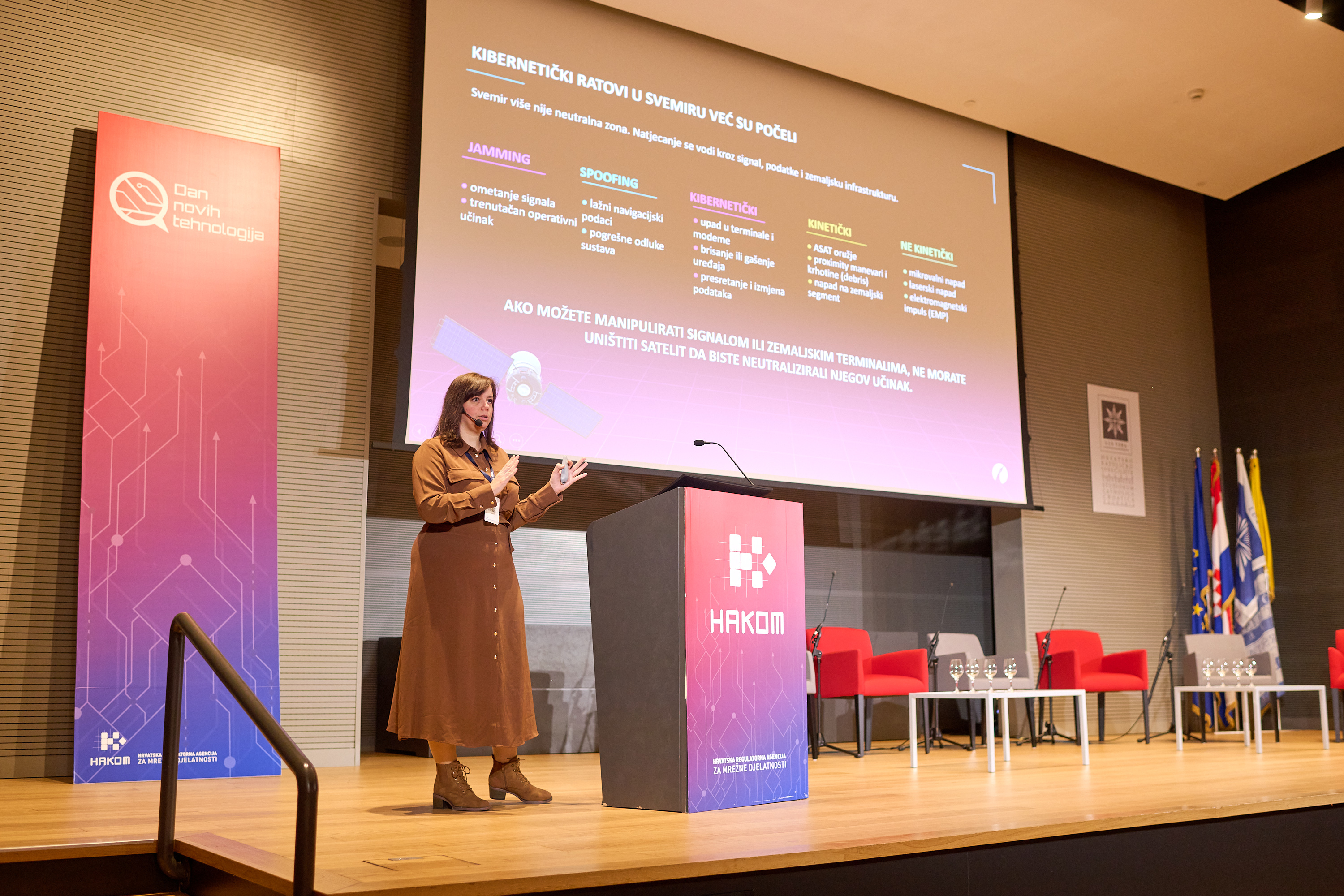
The topic of security in space missions was addressed by Daniela Jović, an expert in the space industry and mission manager of Croatia’s first satellite, CroCube. In her presentation, she highlighted contemporary threats such as cyber attacks, jamming and signal spoofing, and emphasised that security must today be an integral part of the planning and development of every mission.
“Security can no longer be regarded as something that is added at the end. It must be incorporated from the very beginning, already at the mission design stage, because a satellite is not an isolated object, but part of a broader system that includes manufacturing, transport, integration, ground stations and operations,” said Jović.
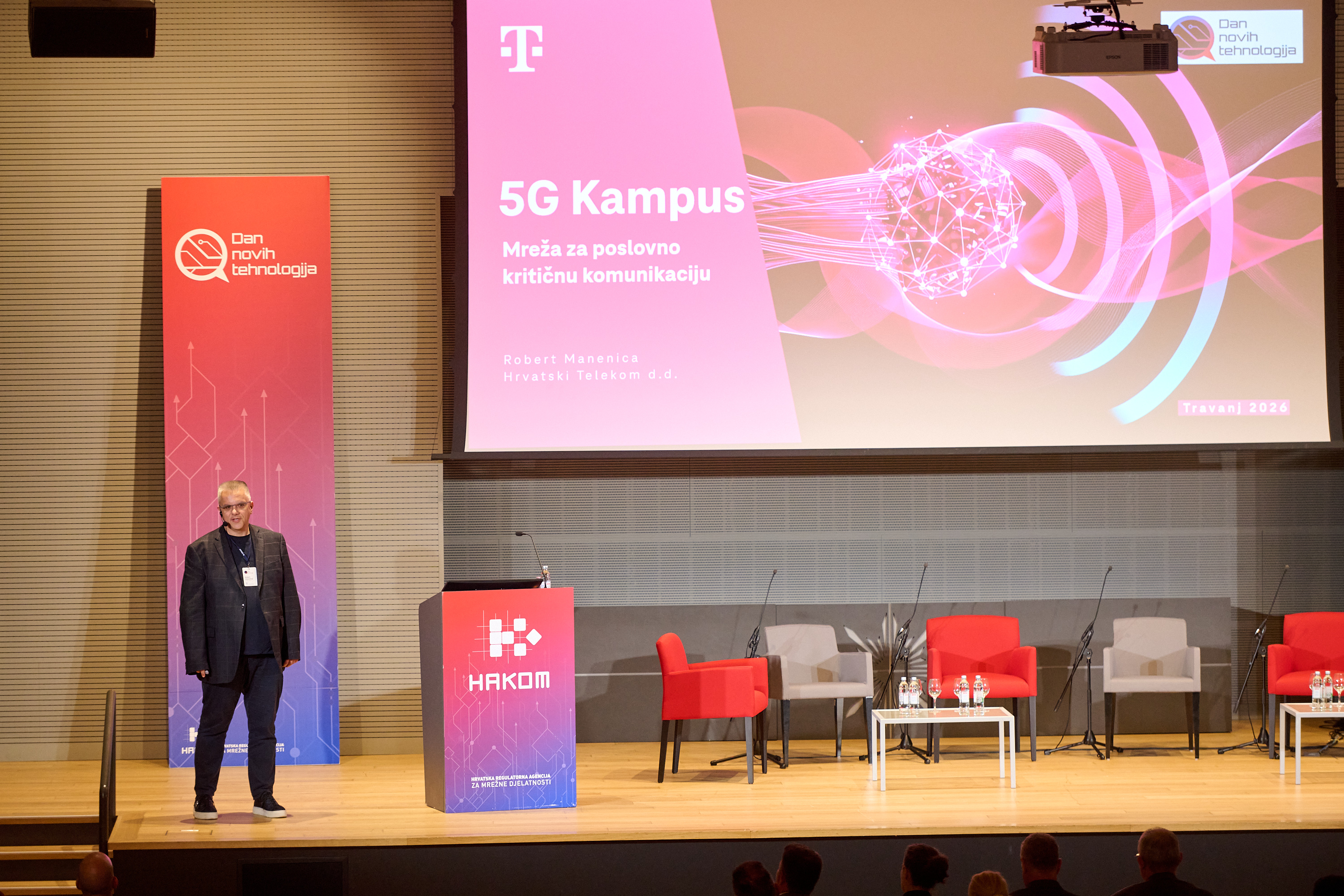
Robert Manenica of Hrvatski Telekom delivered a presentation on the application of private 5G networks in mission-critical business environments. He presented examples of implementation at the Port of Rijeka and at airports, and highlighted the importance of reliable, manageable and predictable communication infrastructure for automation, safety and further development.
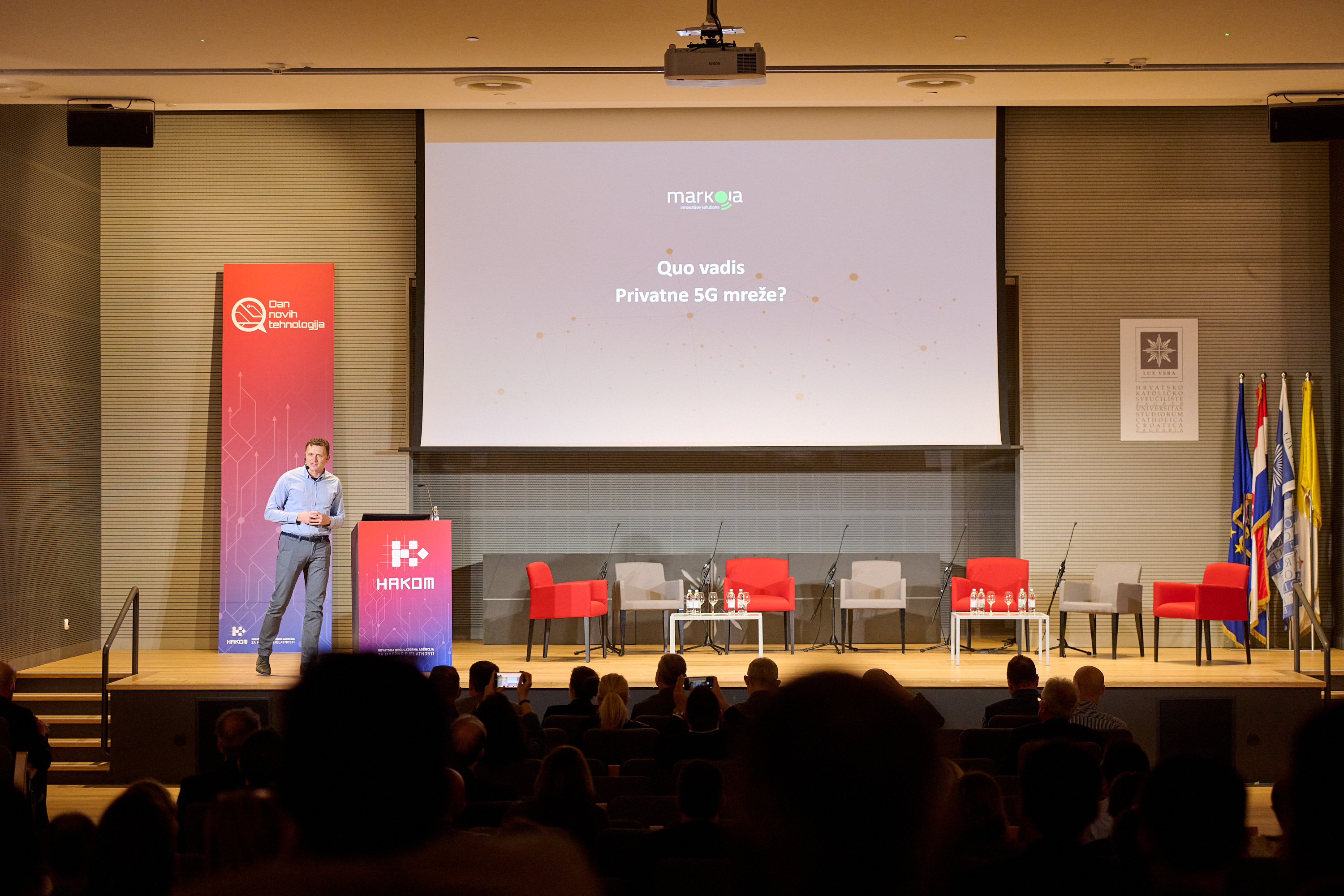
The role of private 5G networks in industry was also addressed by Josip Dulj from the company Markoja, who discussed examples of their application in port systems and the circumstances in which 5G networks represent an appropriate and efficient solution, particularly where coverage, mobility and security are key requirements.
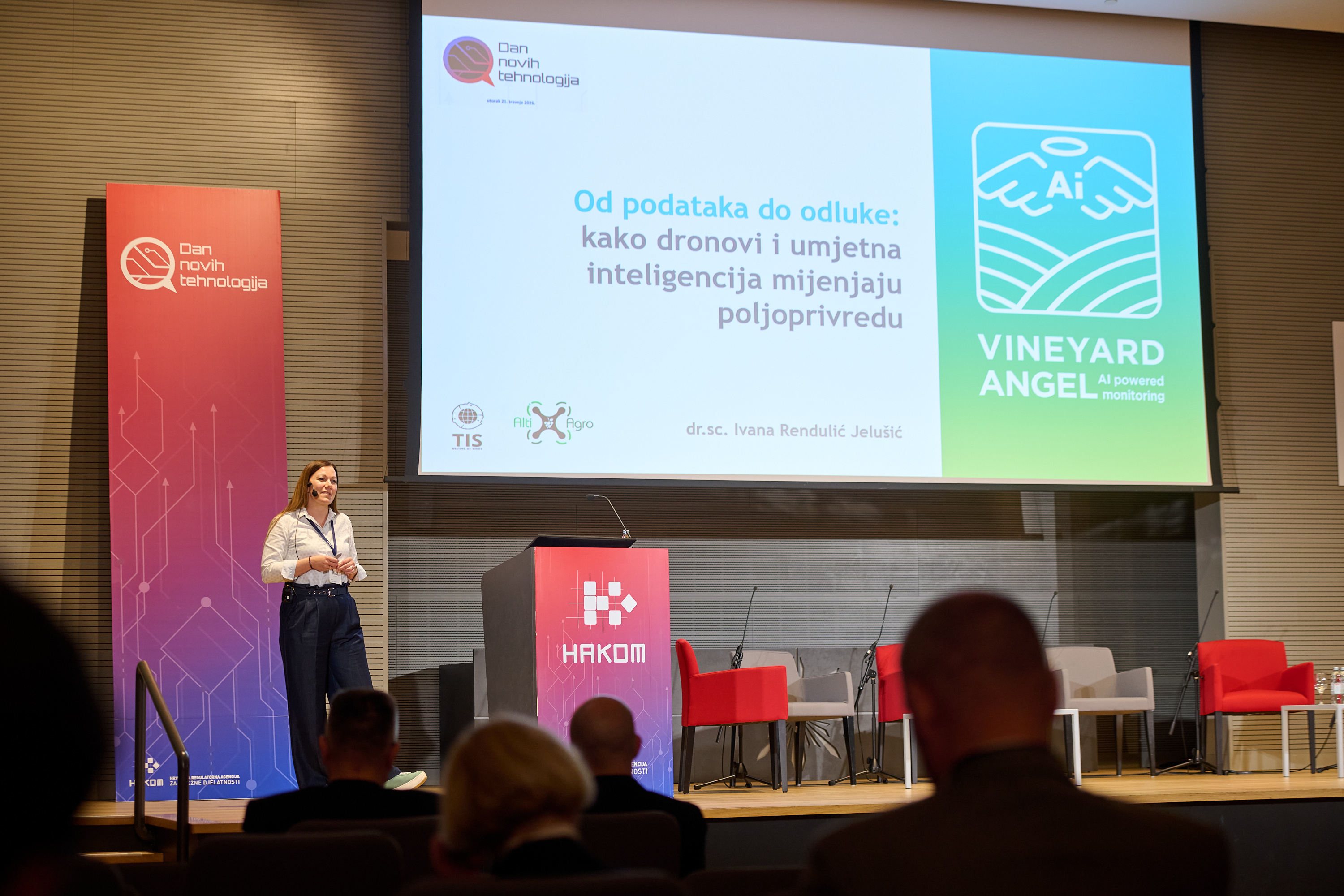
The final presentation, on the use of drones and artificial intelligence in agriculture, was delivered by Ivana Rendulić Jelušić from ALTI AGRO d.o.o. The presentation demonstrated how data collected through sensors, drones and analytical tools can be used for more precise production management, particularly in viticulture.
It was emphasised that such technologies do not replace experts, but rather enable them to gain better insight into crop conditions, make faster decisions and manage resources more efficiently.
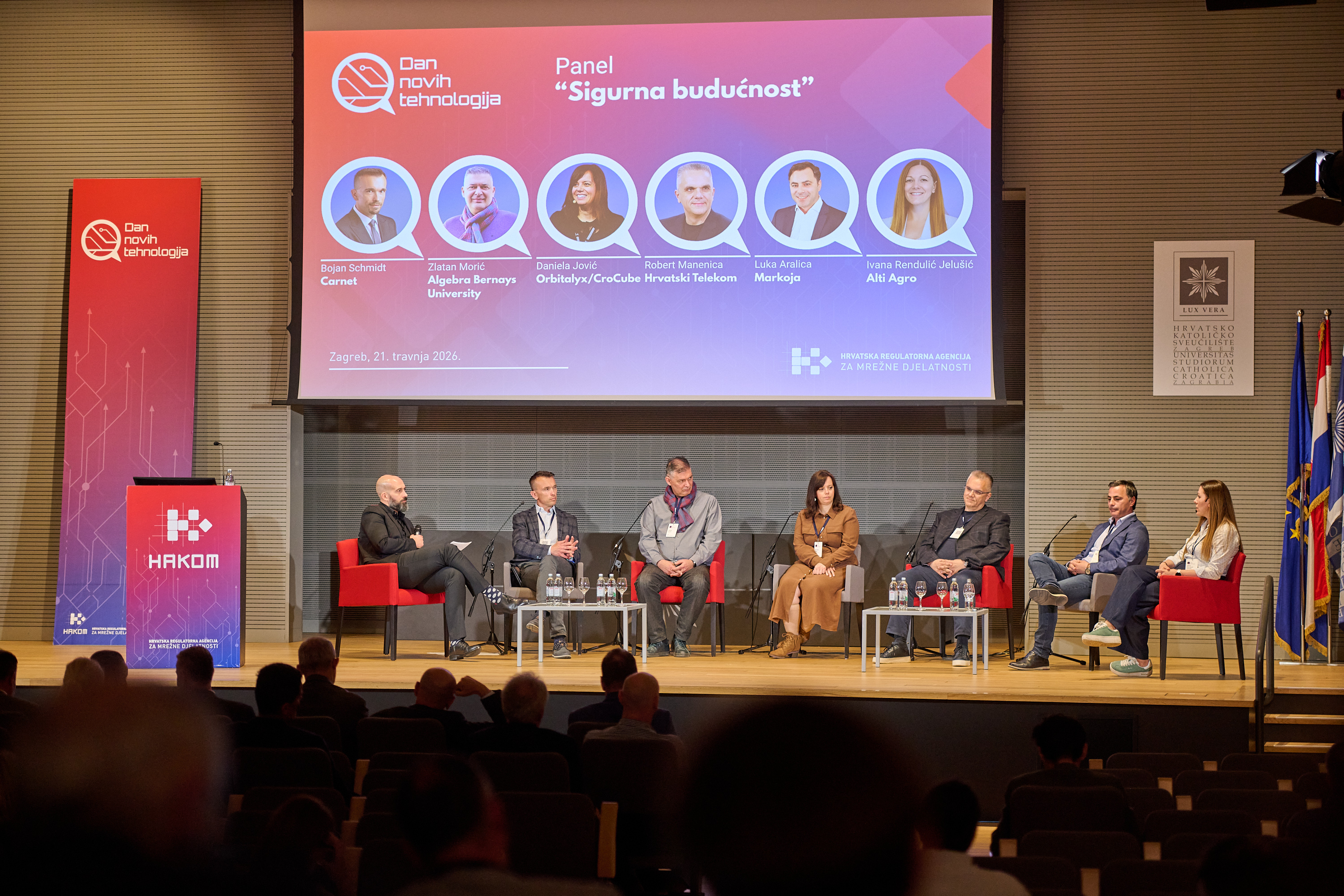
Following the individual presentations, a panel discussion titled “Secure Future” was held, featuring all speakers. The discussion once again highlighted the importance of secure, reliable and independent connectivity as one of the foundations of digital security and economic development.
A video recording of the conference is available on HAKOM’s YouTube channel.
Gallery


For additional information please contact:
Croatian Regulatory Authority for Network Industries (HAKOM)
- Roberta Frangeša-Mihanovića 9 Street
- 10110 Zagreb, Croatia
- Tel. + 385 (0) 1 700 70 07
- Fax + 385 (0)1 700 70 70
Media inquiries can be submitted online using HAKOM’s official website: www.hakom.hr
About Hakom
HAKOM - Croatian Regulatory Authority for Network Industries – ensures preconditions for a fair market competition, stable growth and environment for innovations in the electronic communications and postal services market. HAKOM protects users’ interests and the possibility of choice among various communications and postal services at affordable prices, defines sustainable competitive conditions for operators and service providers under fair conditions for return on investment, and provides support to economic growth, public services and the quality of life in the Republic of Croatia by using modern technologies. HAKOM’ strategic goals are: to promote regulation of the electronic communications and postal services market, to support growth of investments and innovations in the electronic communications and postal services market, to provide efficient use of limited resources, to accelerate the growth of broadband products and services, to provide affordable offers of communications and postal services, to provide protection and informing of users, to build an efficient and comprehensive information system, to define and implement efficient processes, and to acquire multi-disciplinary expertise in market regulation.