Agreement Signed on the Use of Infrastructure and Radio Spectrum in Border Areas for Mobile Communications Networks with Slovenia
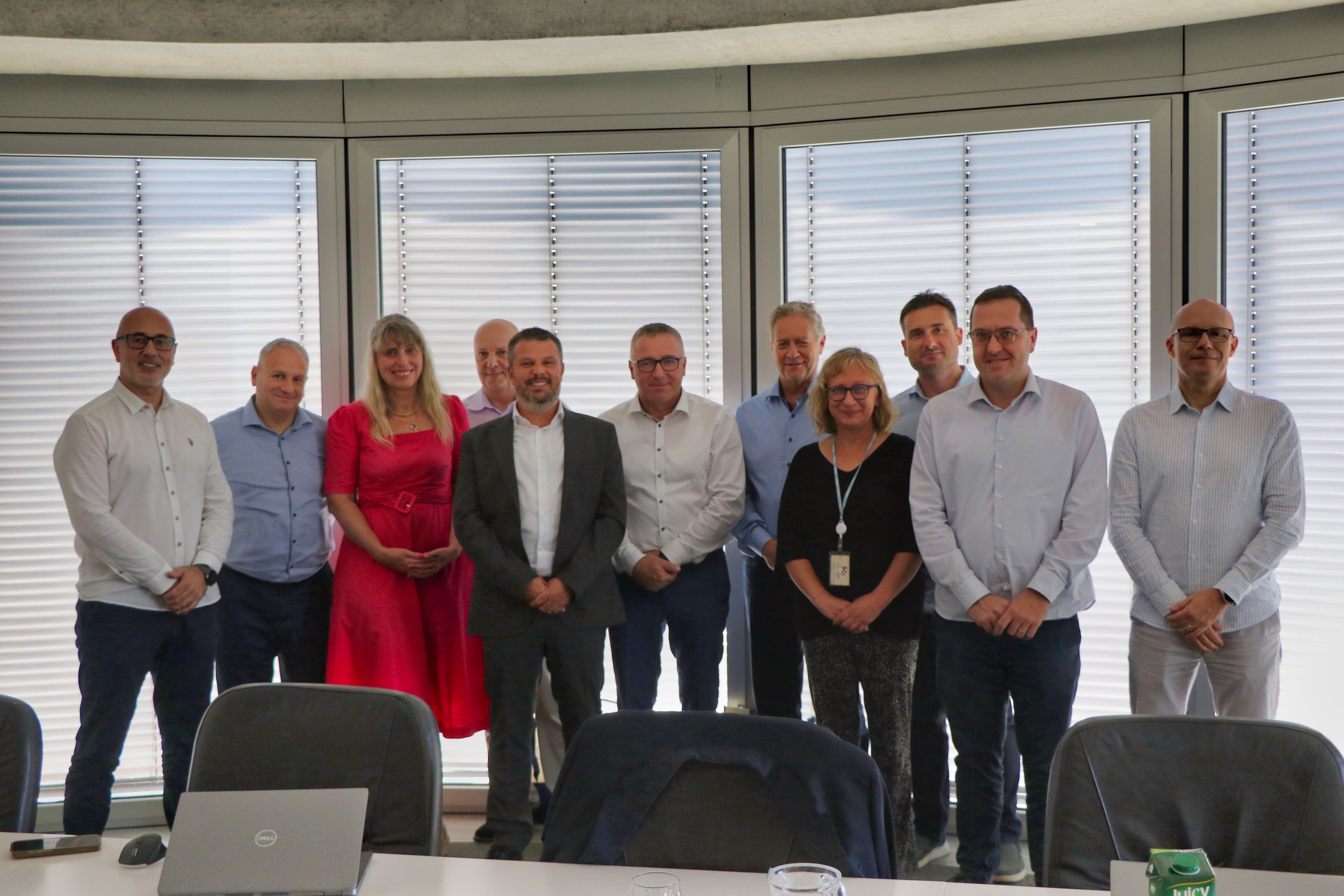
ZAGREB, 20 July 2026 - The Croatian Regulatory Authority for Network Industries (HAKOM) and the Agency for Communication Networks and Services of the Republic of Slovenia (AKOS) signed a technical agreement on 15 July 2026 establishing the principles, technical conditions and administrative procedures governing the use of electronic communications infrastructure and radio spectrum in the border areas of Croatia and Slovenia.
The agreement establishes a framework under which an operator from one country may, on the basis of a prior agreement with an operator from the other country and subject to the necessary regulatory approvals, use infrastructure or radio spectrum in the border areas of the other country.
The purpose of the agreement is to promote the more efficient use of radio spectrum and existing infrastructure in order to achieve the best possible mobile communications network coverage across the national territory, particularly in areas where cross-border coordination presents specific technical challenges. It will enable operators to plan the development of their networks more flexibly and efficiently, while providing higher-quality mobile services to users in border areas. Improved coverage of each country's own territory will also reduce the incidence of inadvertent roaming, whereby mobile devices automatically connect to the network of an operator in the neighbouring country.
Among other matters, the agreement sets out the conditions governing:
- the conclusion of agreements between domestic and foreign operators;
- the shared use of sites and infrastructure;
- the use of the appropriate radio spectrum resources; and
- the granting of licences, the amendment of existing licences, or the provision of regulatory approval.
The agreement entered into force on 15 July 2026 and represents a continuation of the cooperation between HAKOM and AKOS in the areas of cross-border coordination and the efficient management of radio spectrum.
The full text of the agreement is available at the following link.
Gallery

For additional information please contact:
Croatian Regulatory Authority for Network Industries (HAKOM)
- Roberta Frangeša-Mihanovića 9 Street
- 10110 Zagreb, Croatia
- Tel. + 385 (0) 1 700 70 07
- Fax + 385 (0)1 700 70 70
Media inquiries can be submitted online using HAKOM’s official website: www.hakom.hr
About Hakom
HAKOM - Croatian Regulatory Authority for Network Industries – ensures preconditions for a fair market competition, stable growth and environment for innovations in the electronic communications and postal services market. HAKOM protects users’ interests and the possibility of choice among various communications and postal services at affordable prices, defines sustainable competitive conditions for operators and service providers under fair conditions for return on investment, and provides support to economic growth, public services and the quality of life in the Republic of Croatia by using modern technologies. HAKOM’ strategic goals are: to promote regulation of the electronic communications and postal services market, to support growth of investments and innovations in the electronic communications and postal services market, to provide efficient use of limited resources, to accelerate the growth of broadband products and services, to provide affordable offers of communications and postal services, to provide protection and informing of users, to build an efficient and comprehensive information system, to define and implement efficient processes, and to acquire multi-disciplinary expertise in market regulation.