Conference “Together for a Better Internet”: Institutions and Children United on Safety in the Digital Environment

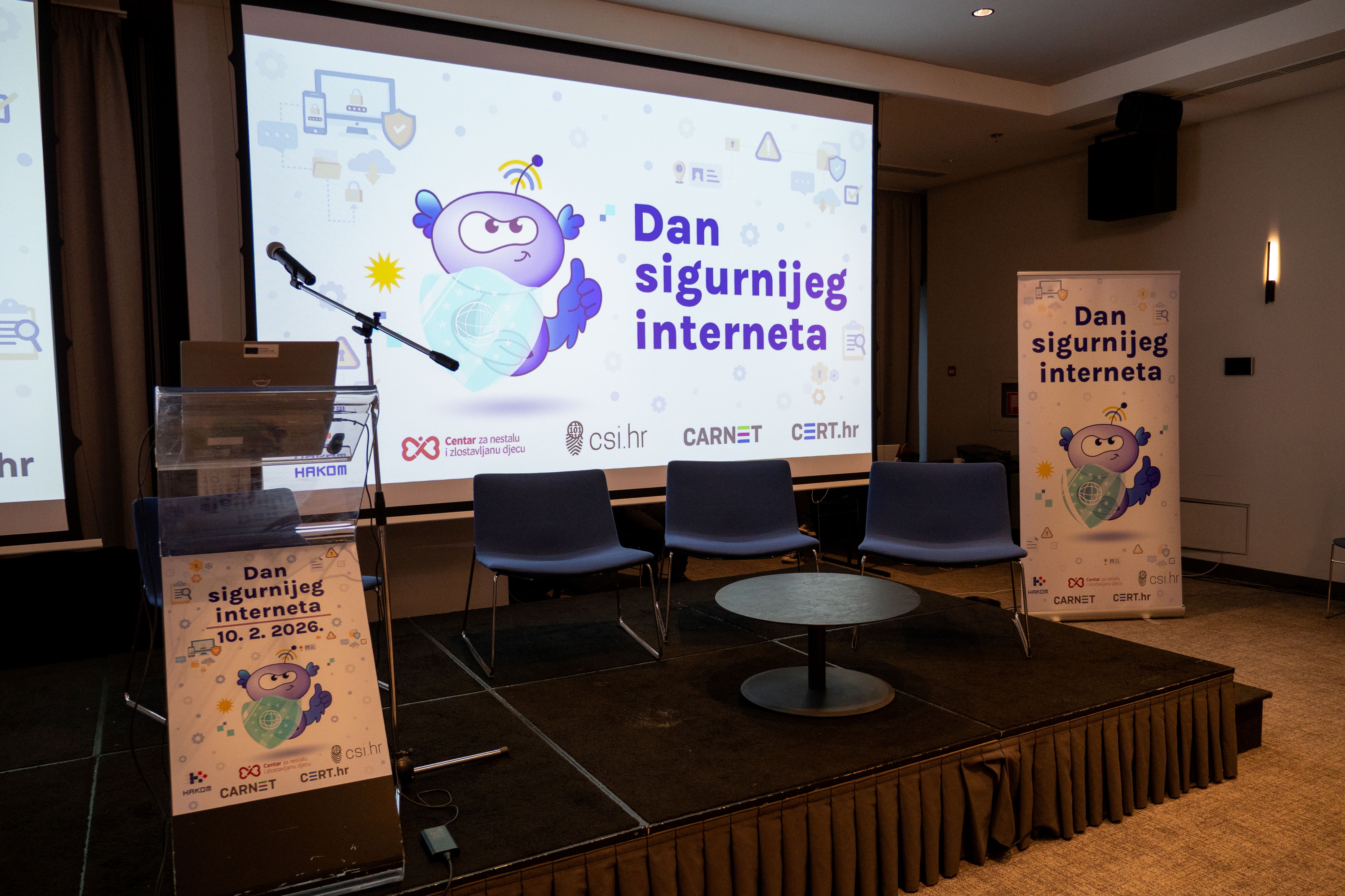
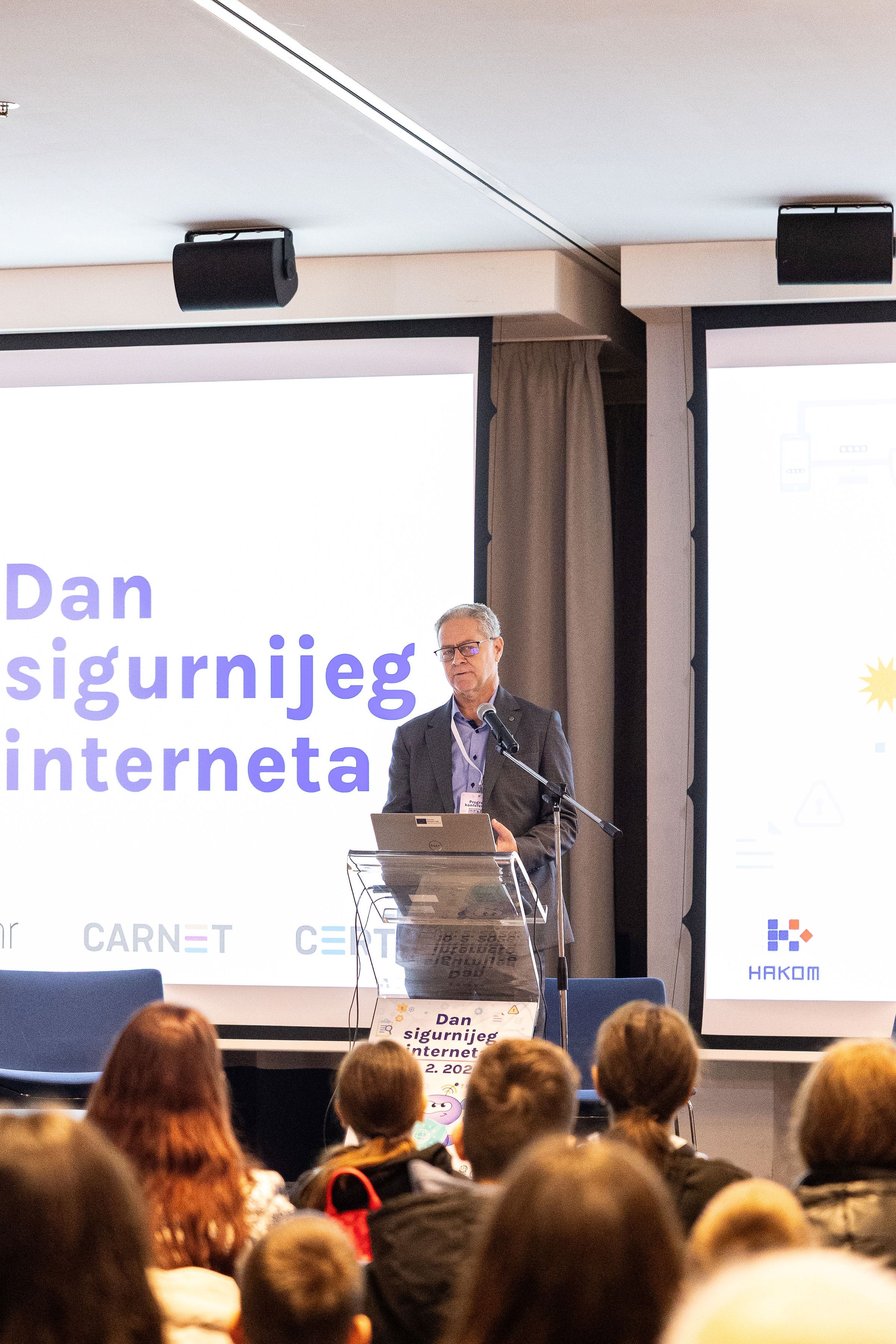
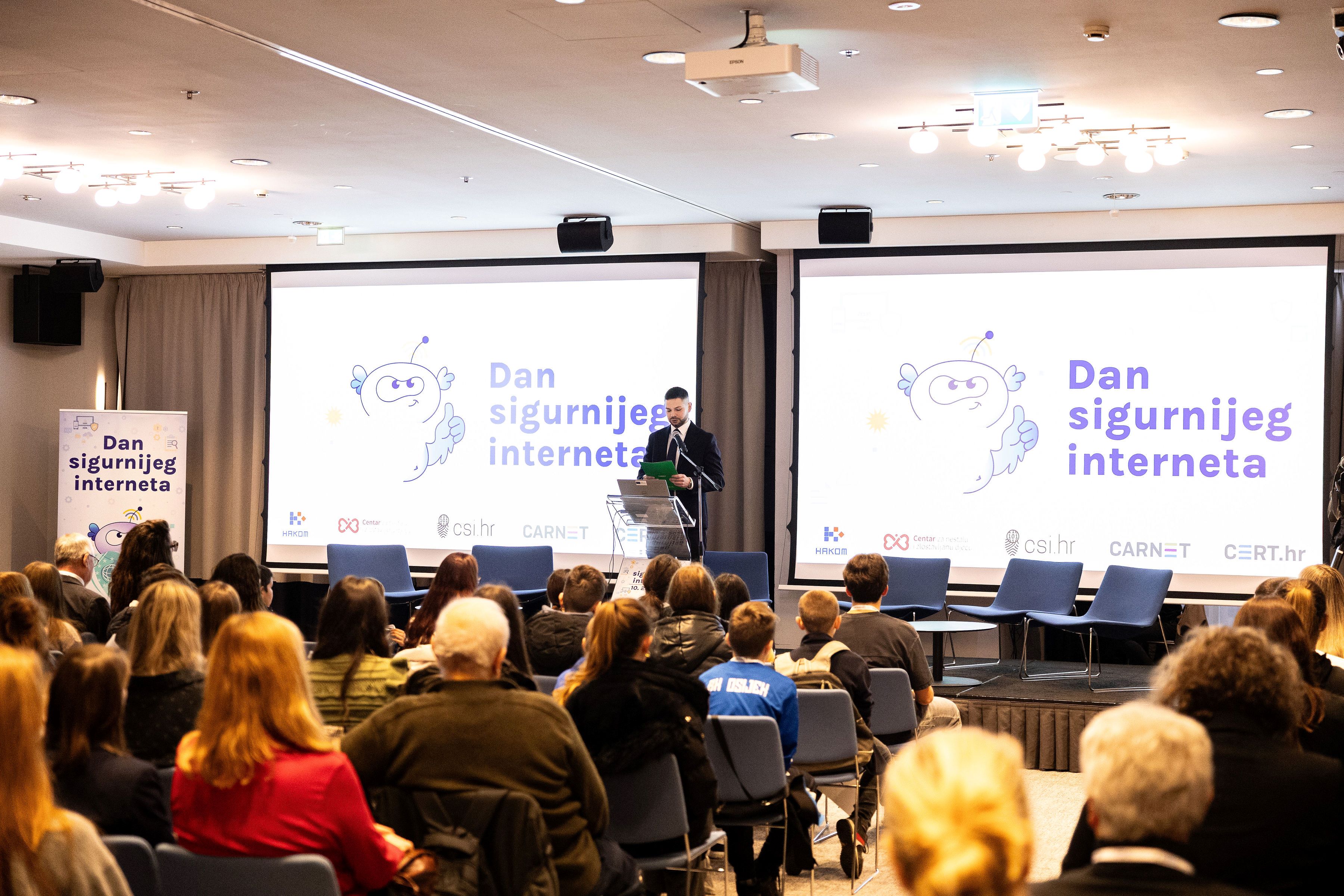
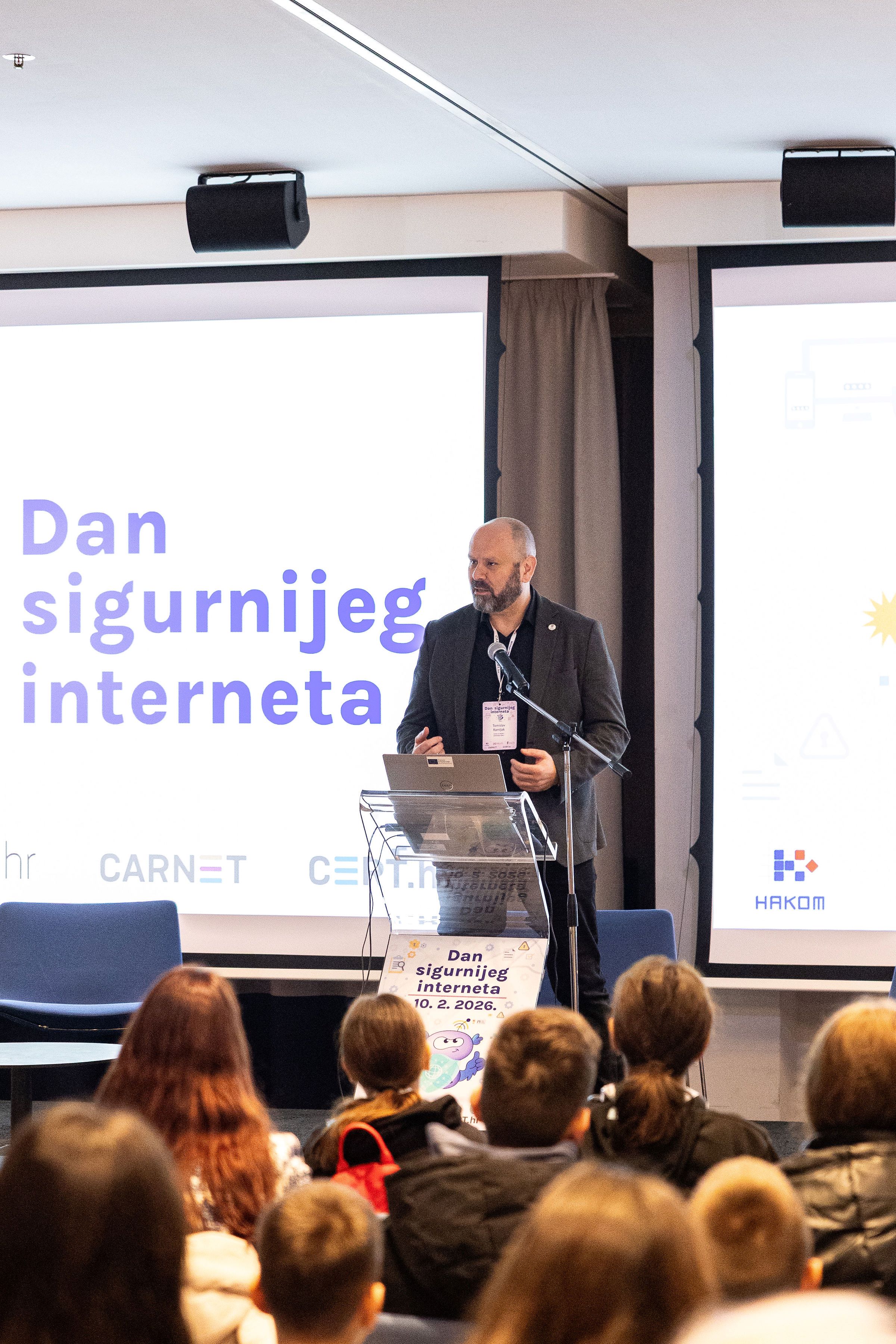
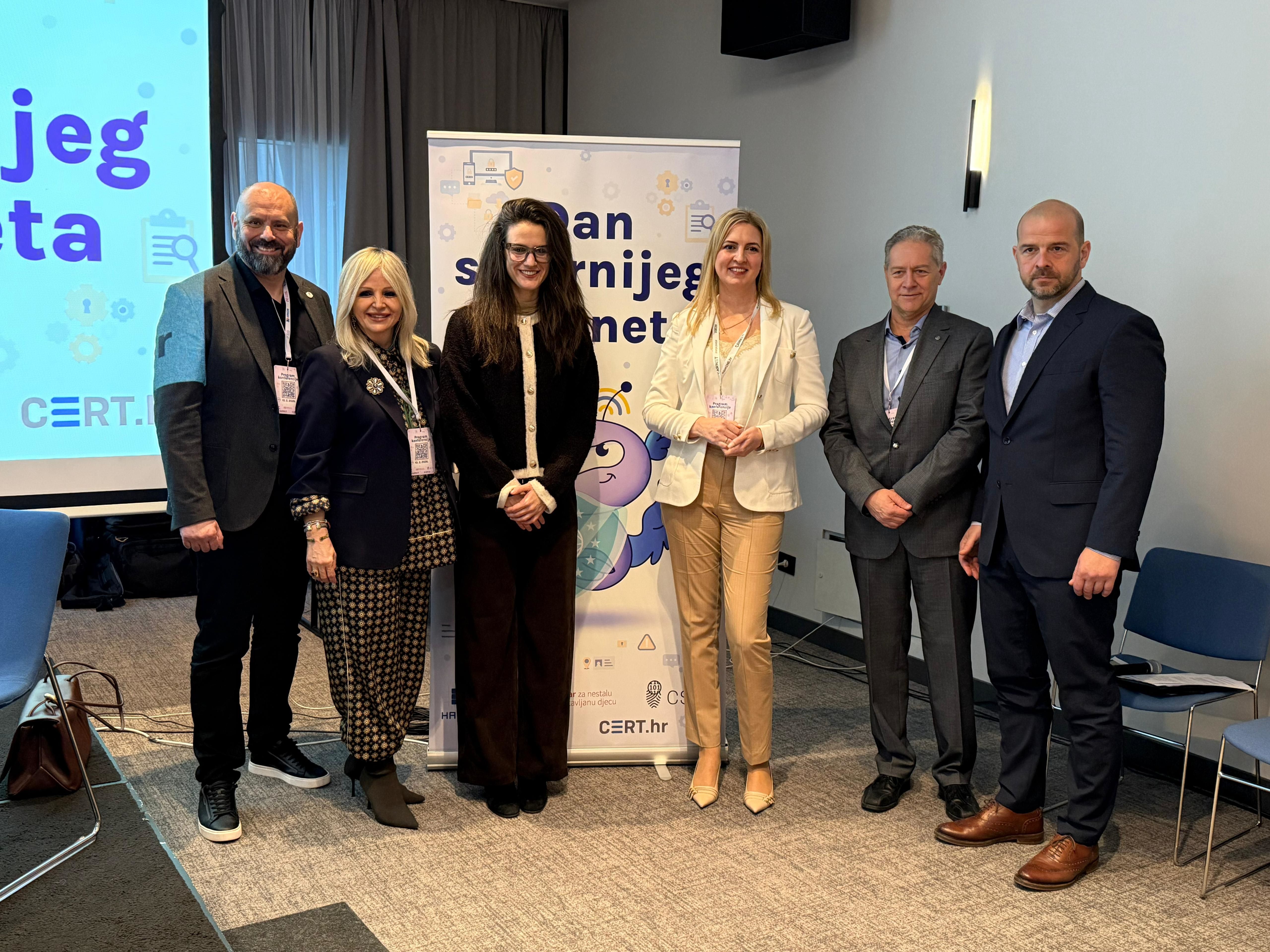
The conference “Together for a Better Internet”, organised by the Safer Internet Centre, HAKOM and CARNET’s National CERT, was held in Zagreb to mark Safer Internet Day.On behalf of the organisers, the attendees were addressed by Miro Đuzel, CEO for National CERT; Tomislav Ramljak, Head of the Safer Internet Centre; and Tonko Obuljen, President of the HAKOM Council.
“Safer Internet Day reminds us of the importance of ensuring that the internet is a place where we feel safe, comfortable and free — a place for learning, social interaction and exploration, rather than one associated with fear or discomfort. This is particularly important for children and young people. Ensuring children’s online safety is not the responsibility of a single institution; it is a shared responsibility of us all — parents, teachers, experts, institutions, and young users themselves. That is precisely why events such as this are so important: they bring us together and encourage cooperation,” said Miro Đuzel,CEO for the National CERT.
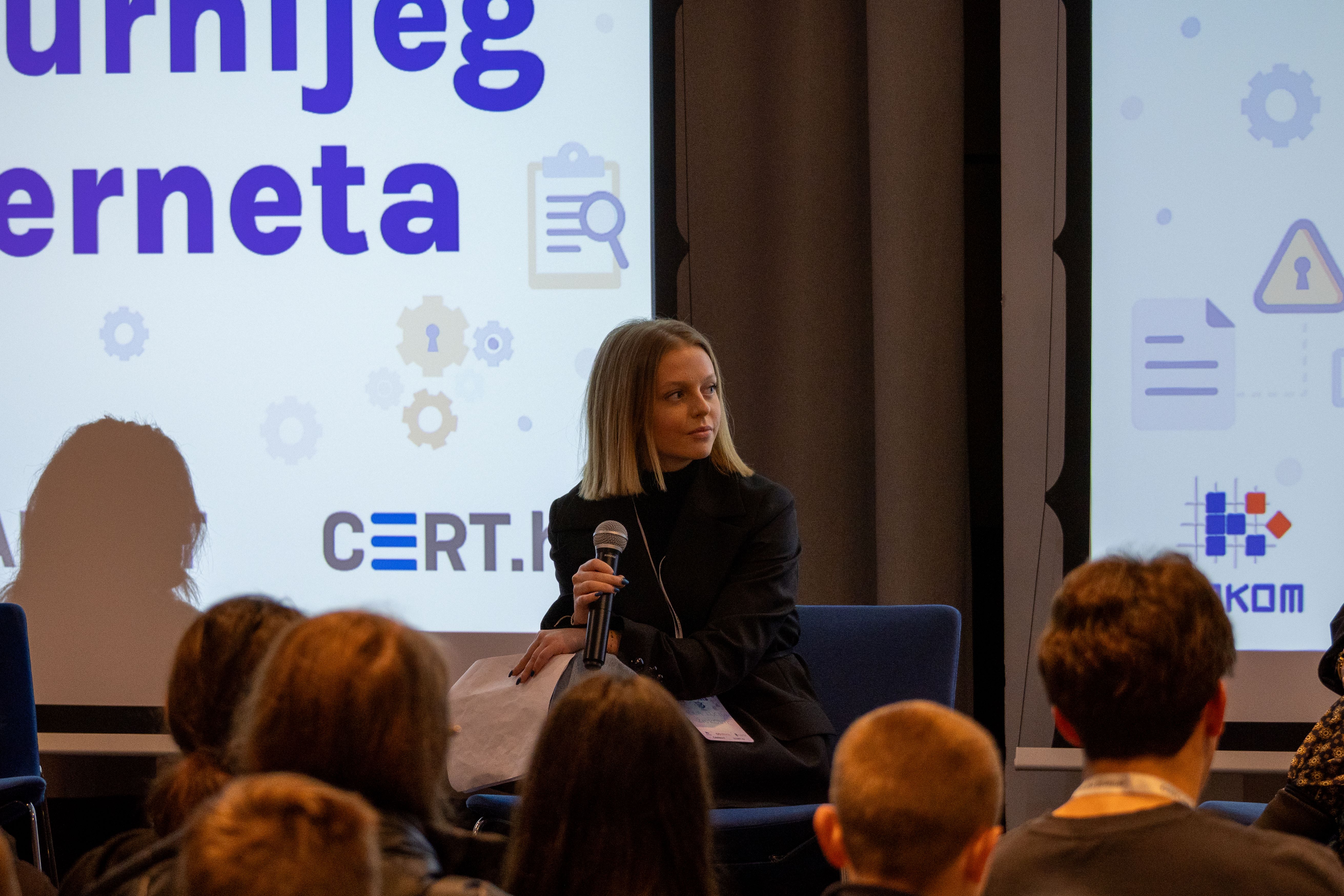
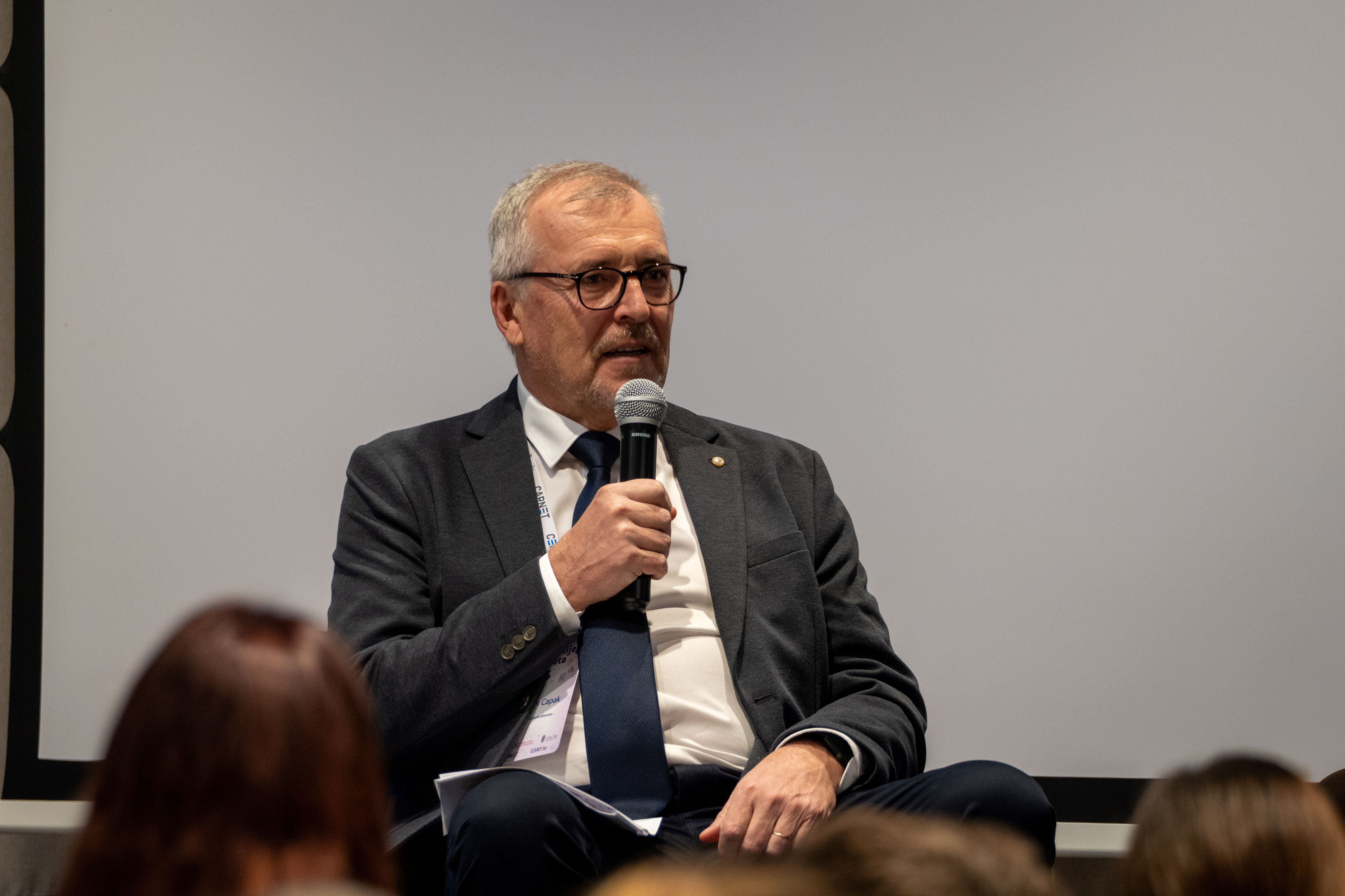
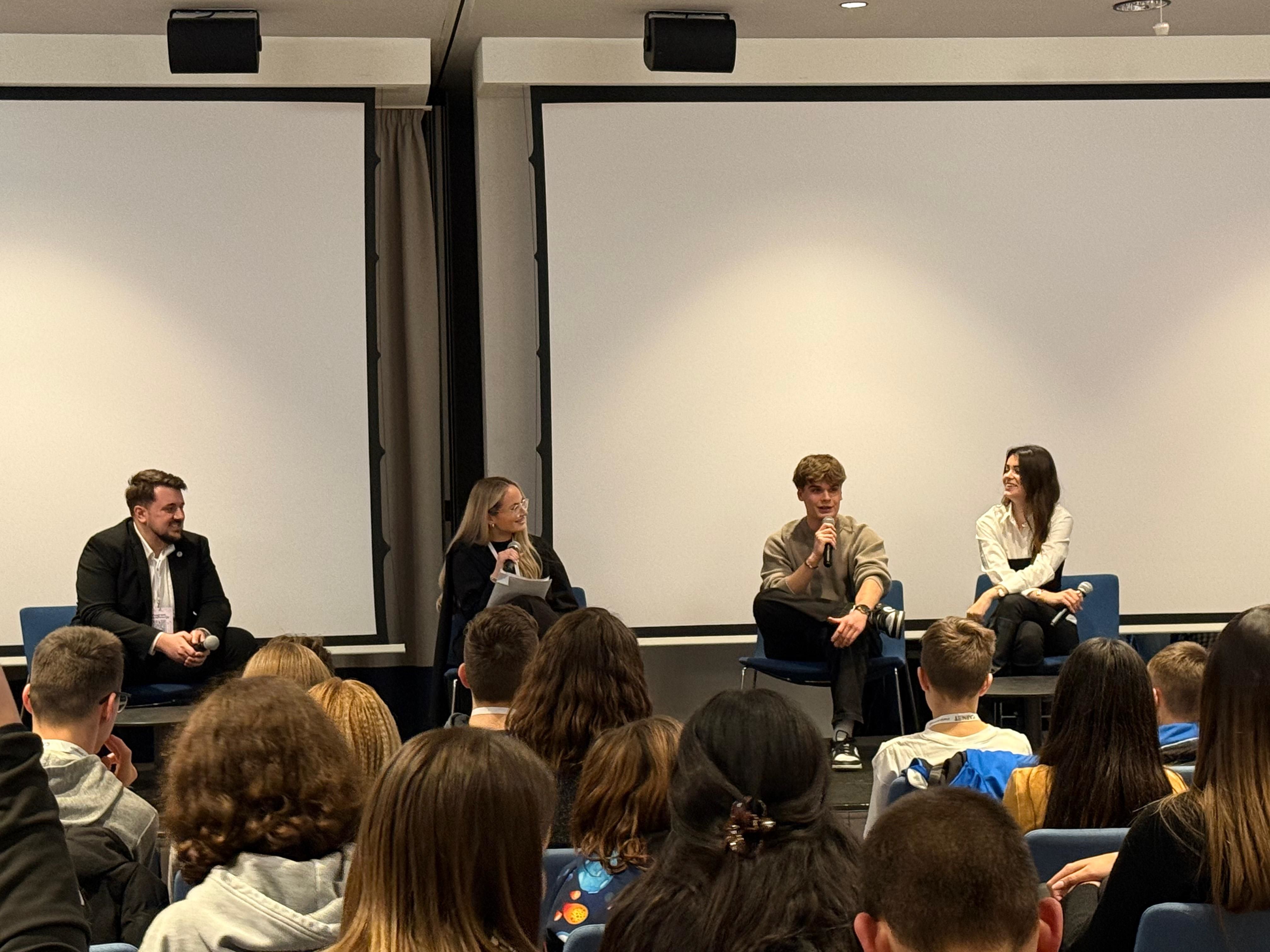
The opening panel was led by Ena, a sixteen-year-old student. Among the speakers were State Secretary Zrinka Mužinić Bikić from the Ministry of Science, Education and Youth; Tatjana Katkić Stanić, the Ombudsperson for Children; Ms Katarina Milković, MSc, Director of the Agency for Education and Training, Krunoslav Capak, Director General of the Croatian Institute of Public Health (HZJZ), and State Secretary Nevenka Lastrić Đurić from the Ministry of the Internal Affairs. They discussed their personal online habits as well as the measures their institutions take to safeguard children on the internet. By actively involving children in the conference programme, the organisers emphasised the role of children and young people as equal participants in the dialogue on online safety.
“It is important that children know how to protect themselves online and make sound decisions about whom they can trust. Technology is wonderful and is advancing very rapidly, but it is only truly beneficial when it serves people for good purposes, as it can also be misused. We have developed a tool called the ‘Privacy Calculator’, which helps people understand what happens to their data and how it is used,” emphasised Tonko Obuljen, who also had a special message for the many children attending the conference.
“The aim is not to be afraid; the aim is to be cautious and vigilant. Rules are important, but no rule is sufficient on its own — we need cooperation, above all with your parents.Be honest with your parents and confide in them. You are not a tell-tale if you report something harmful online or report abuse; you are a hero because you have helped someone.
Perhaps that time you helped yourself, perhaps someone else — but next time, someone will help you,” Obuljen concluded.
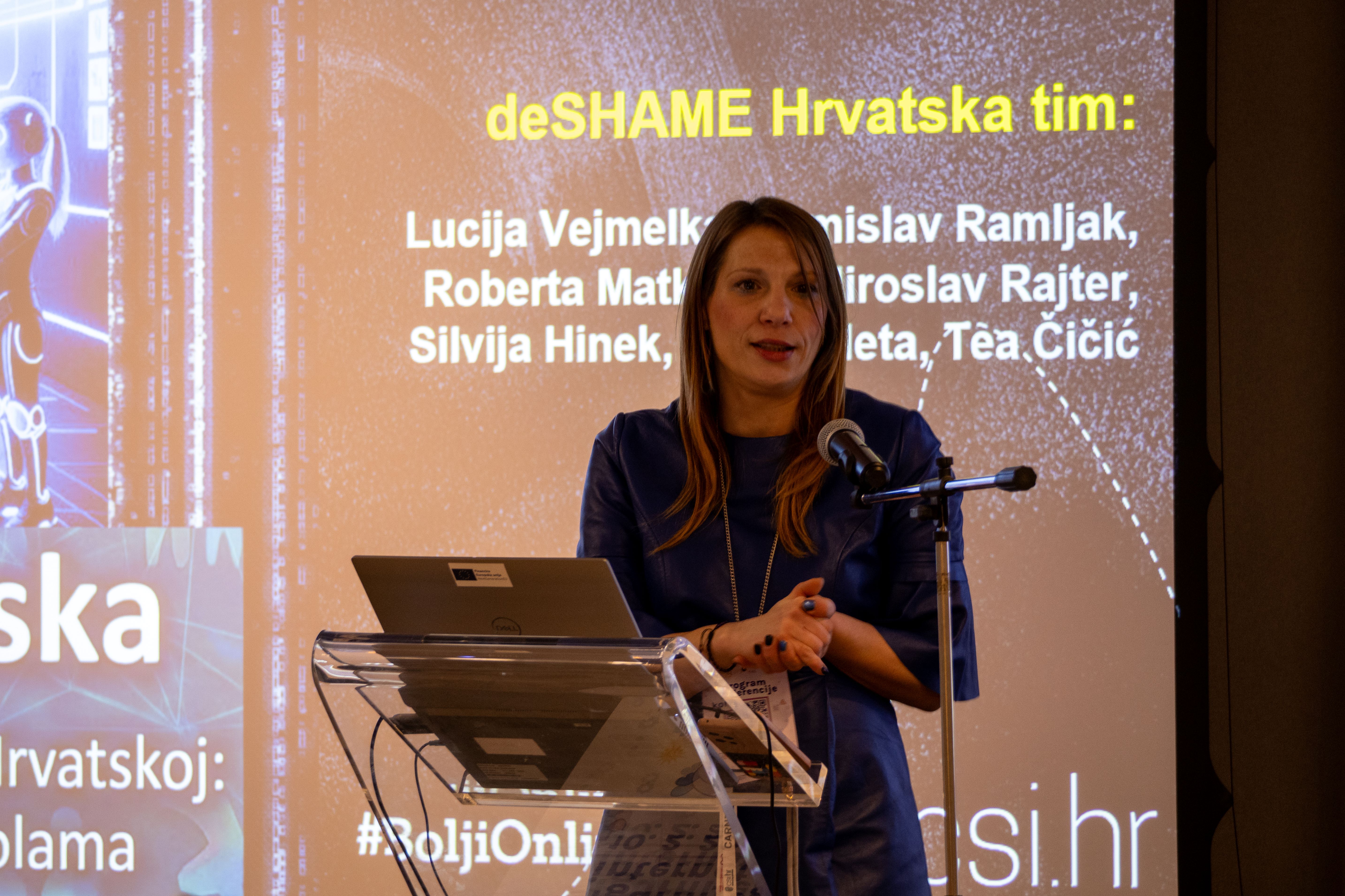
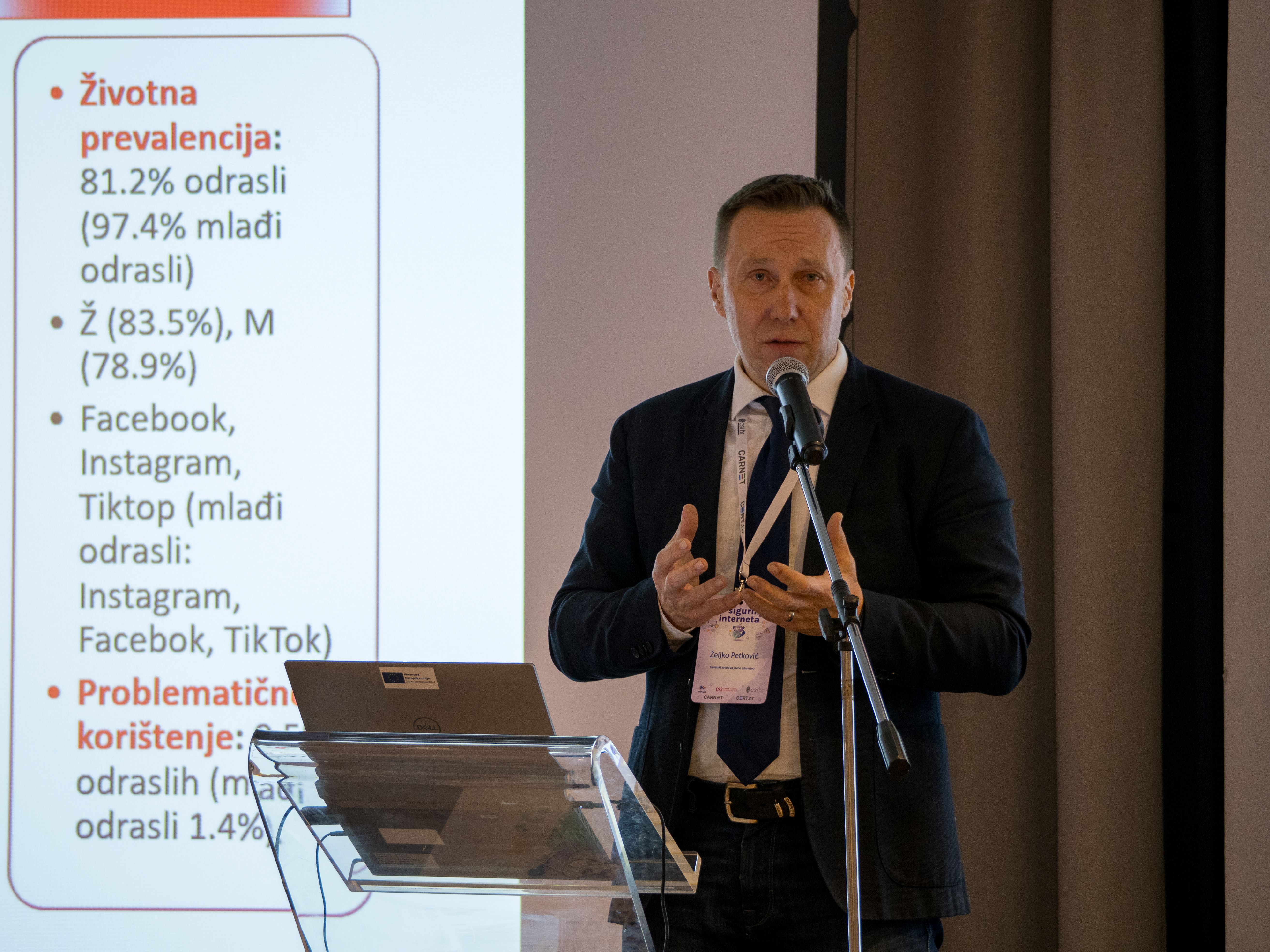
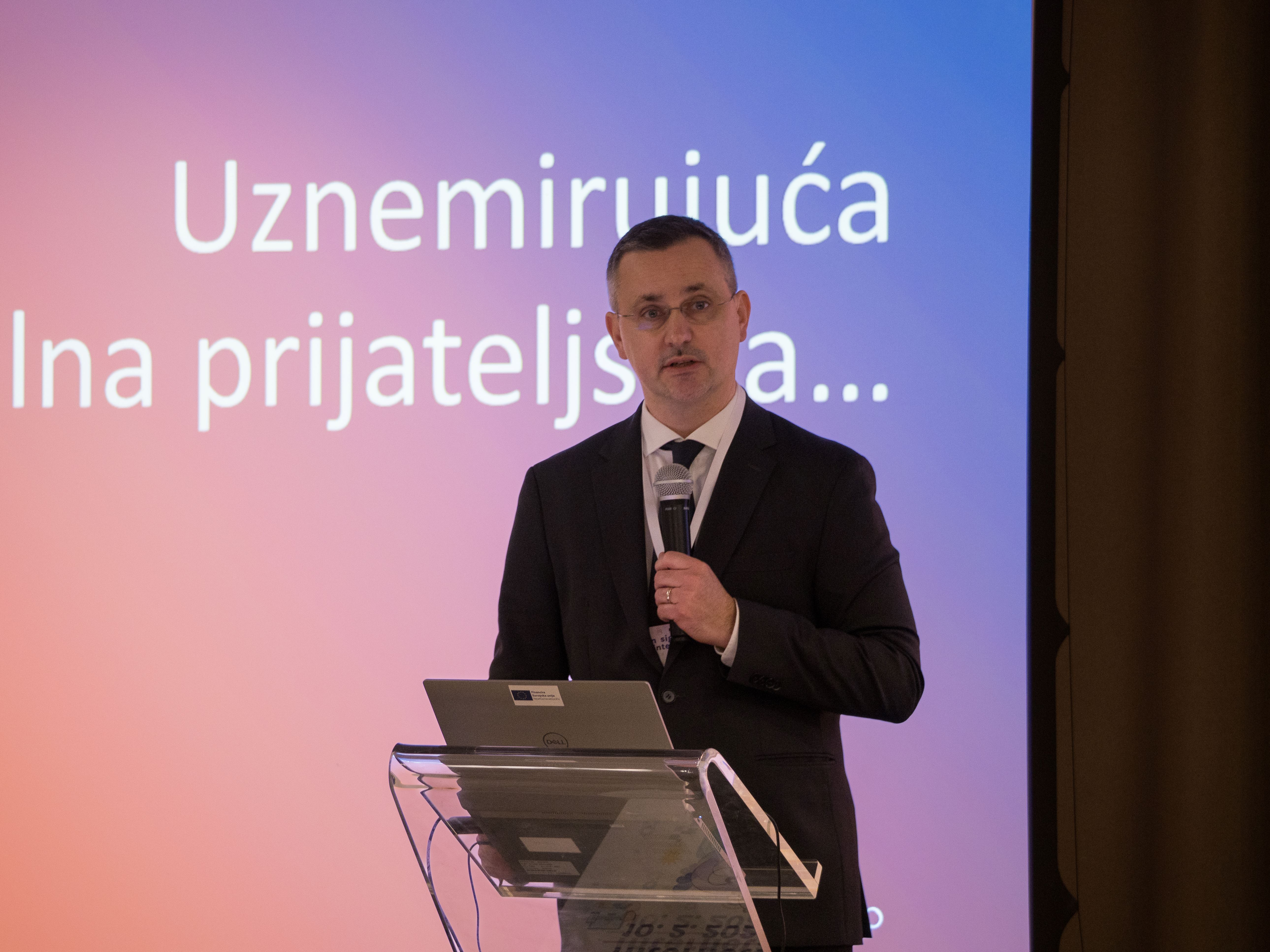
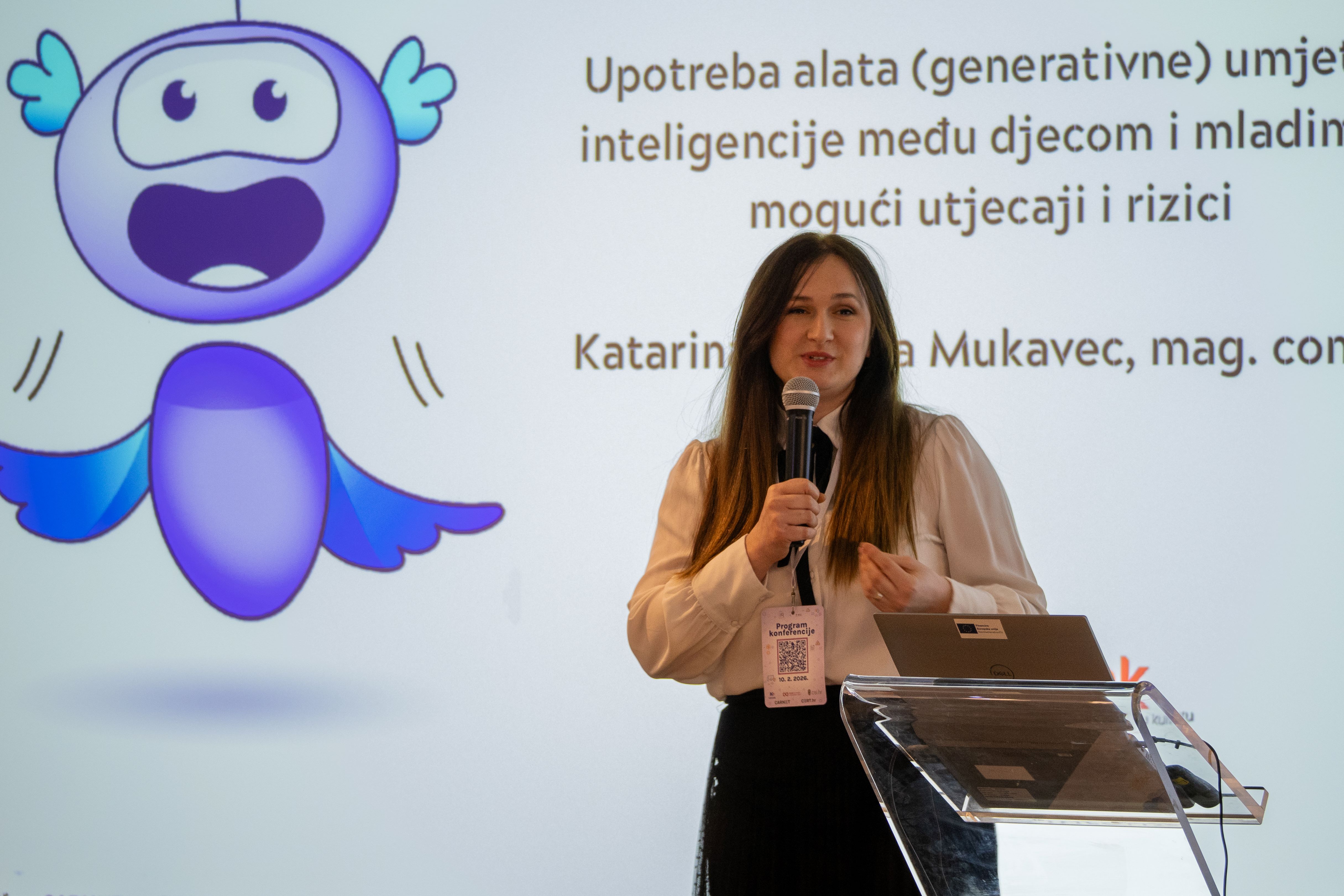
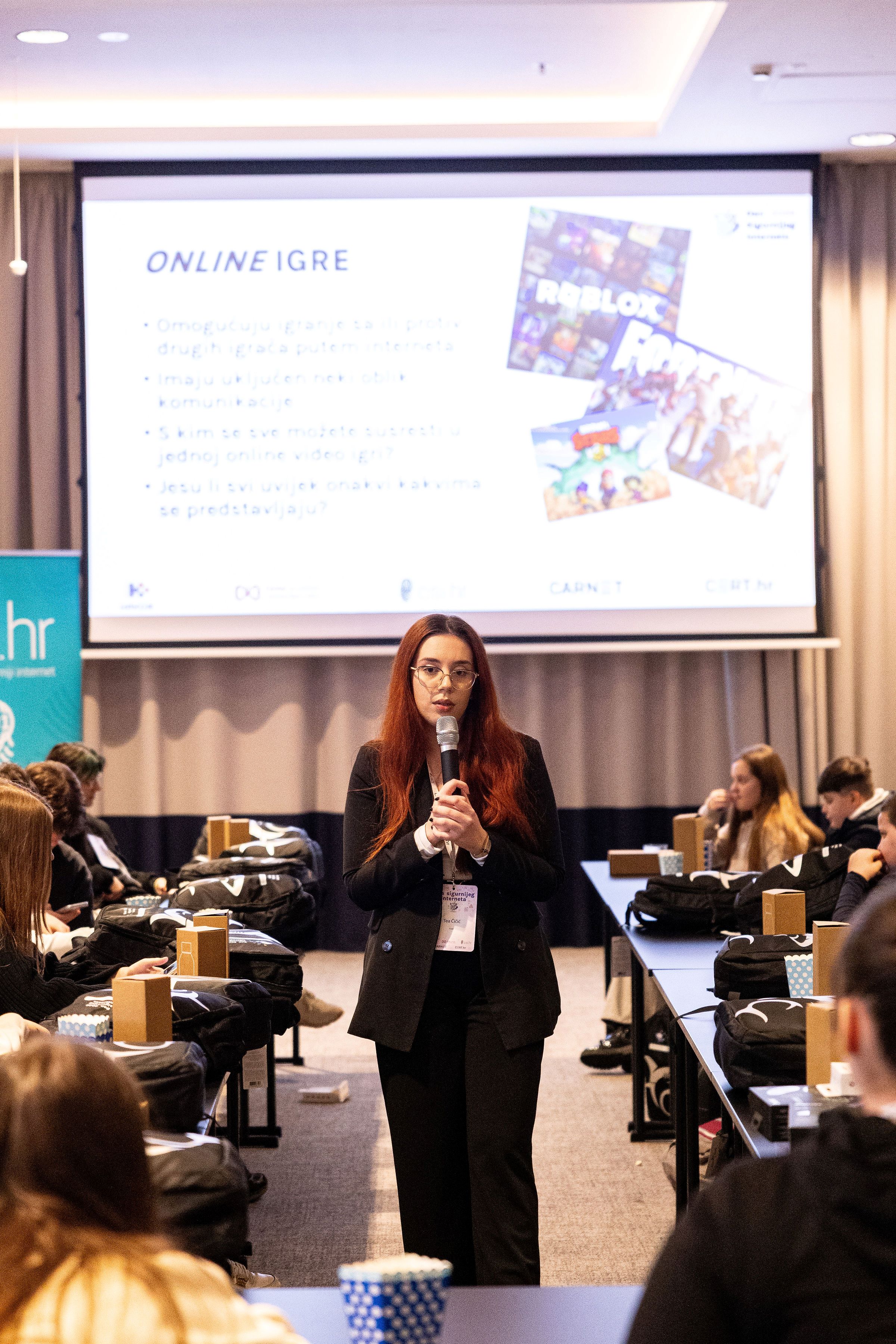
The programme continued with a series of expert presentations. Assistant Professor Dr Lucija Vejmelka presented the results of the national deSHAME 3 study, while Željko Petković from the Croatian Institute of Public Health spoke about policies for ensuring a healthy online environment in Croatia, emphasising a public health approach to children’s digital wellbeing. Lidija Gamulin from UNICEF Croatia explained the Code for the Protection and Promotion of Children’s Rights in the Digital Environment, presenting the common standards signed by telecommunications operators. Full professor at the Department of Communication Science at the Catholic University of Croatia. Igor Kanižaj addressed issues of relationships, trust and communication habits in the digital age in his lecture entitled Challenges of Communication in the World of Social Media and Artificial Intelligence, and Katarina Blažina Mukavec spoke about the use of generative artificial intelligence among children and young people.
“46.1% of parents never or almost never discuss with their children the mistakes they make online, and 51.3% never or almost never set rules for internet use. Our task is, above all, to empower parents and to teach both them and their children communication skills and digital literacy,” said Kanižaj.
A special part of the programme focused on children through workshops, including the joint workshop “Let’s Teach Adults”, which further emphasised the importance of intergenerational dialogue and understanding digital challenges.
“The Safer Internet Centre works daily with children, parents and professionals who deal with the concrete consequences of online abuse and violence. Through this conference, we want to send a message that children’s online safety is not the responsibility of an individual, but a shared obligation of institutions, systems and society as a whole,” said Tomislav Ramljak, Head of the Safer Internet Centre.
“Children have the right to a safe, supportive and dignified digital environment. It is our responsibility not to see them merely as internet users who need protection, but as active participants whose voices should be heard, who should be empowered and involved in decisions affecting their online lives,” said Tatjana Katkić Stanić, the Ombudsperson for Children.
Caring for children online is an ongoing and shared responsibility. Only through continuous cooperation between institutions, experts, parents and the children themselves can we create a digital environment in which children are safe, empowered and protected.
Gallery

For additional information please contact:
Croatian Regulatory Authority for Network Industries (HAKOM)
- Roberta Frangeša-Mihanovića 9 Street
- 10110 Zagreb, Croatia
- Tel. + 385 (0) 1 700 70 07
- Fax + 385 (0)1 700 70 70
Media inquiries can be submitted online using HAKOM’s official website: www.hakom.hr
About Hakom
HAKOM - Croatian Regulatory Authority for Network Industries – ensures preconditions for a fair market competition, stable growth and environment for innovations in the electronic communications and postal services market. HAKOM protects users’ interests and the possibility of choice among various communications and postal services at affordable prices, defines sustainable competitive conditions for operators and service providers under fair conditions for return on investment, and provides support to economic growth, public services and the quality of life in the Republic of Croatia by using modern technologies. HAKOM’ strategic goals are: to promote regulation of the electronic communications and postal services market, to support growth of investments and innovations in the electronic communications and postal services market, to provide efficient use of limited resources, to accelerate the growth of broadband products and services, to provide affordable offers of communications and postal services, to provide protection and informing of users, to build an efficient and comprehensive information system, to define and implement efficient processes, and to acquire multi-disciplinary expertise in market regulation.