HAKOM brings together key stakeholders in the electronic communications market at Market Day 2026
ZAGREB, 13 October 2026 - The Croatian Regulatory Authority for Network Industries (HAKOM) held its traditional Market Day in Zagreb today, bringing together representatives of operators, industry, regulatory bodies and the expert community for an annual event dedicated to current challenges and the future development of the electronic communications market in the Republic of Croatia. The programme featured discussions on consumer rights, the future of the European regulatory framework, trends in internet service pricing, and the results of five years of 5G network development in Croatia.
Electronic communications are the foundation of a competitive economy, digital transformation and national resilience
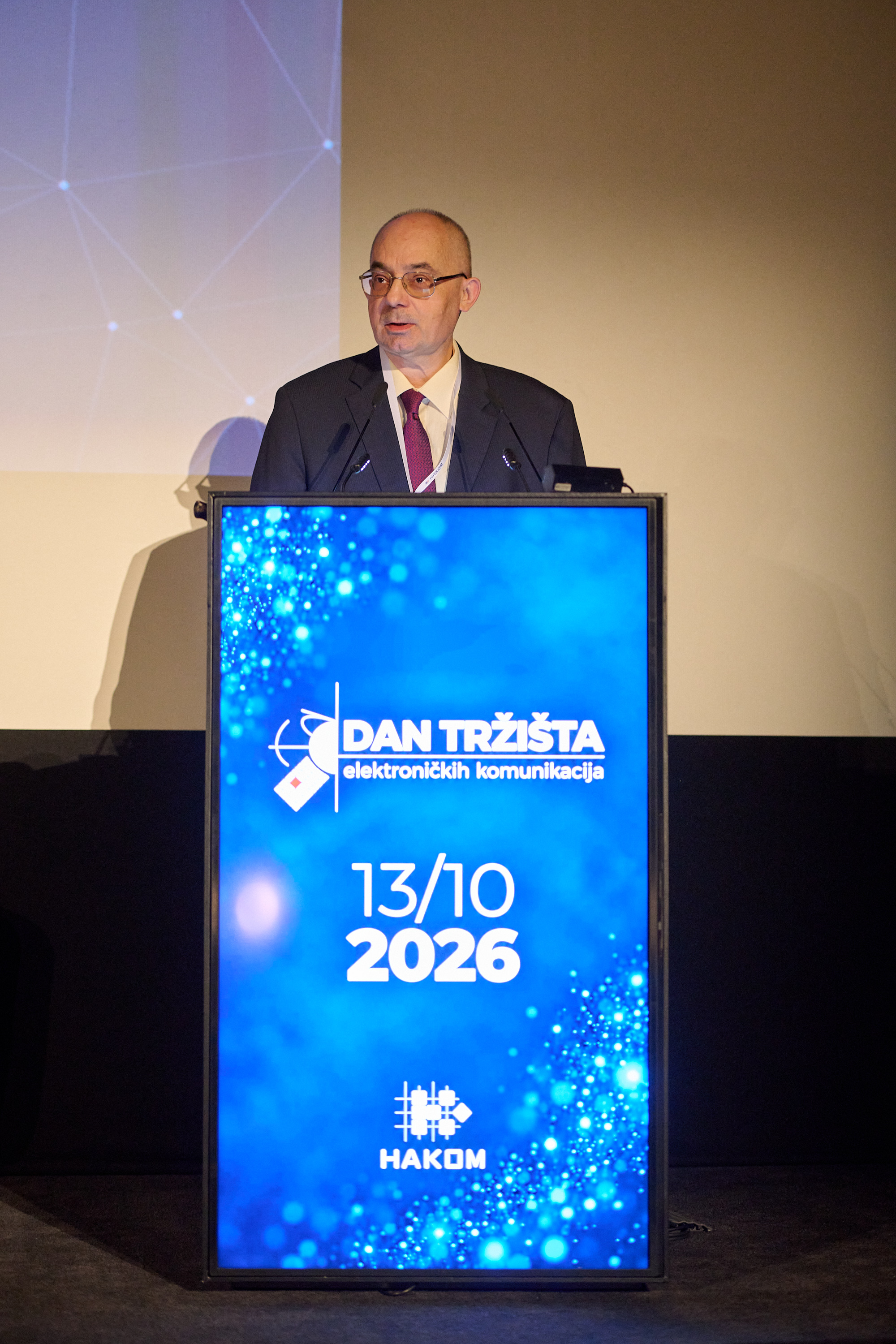
Krešo Antonović, a Director at the Ministry of the Sea, Transport and Infrastructure, delivered opening remarks on behalf of the Government of the Republic of Croatia and Prime Minister Andrej Plenković. He emphasised that electronic communications today are much more than infrastructure: they are the foundation of a competitive economy, digital transformation and national resilience. “The Government of the Republic of Croatia considers the development of modern, secure and reliable digital services and digital infrastructure to be one of the most important prerequisites for further economic growth and improved living standards for our citizens. Croatia wants to be a country that does not merely keep pace with technological changes and trends, but actively helps shape them. “This means continuing to create favourable conditions for investment in digital networks, accelerating the digital transformation of the economy and public services, and encouraging innovation and the development of new technologies. At the same time, we expect technological progress to make a tangible difference to the everyday lives of Croatian citizens through better services, affordable prices, improved connectivity and effective protection of consumer rights,” Antonović stated.
HAKOM Expects to Take on a Wide Range of Additional Regulatory Responsibilities
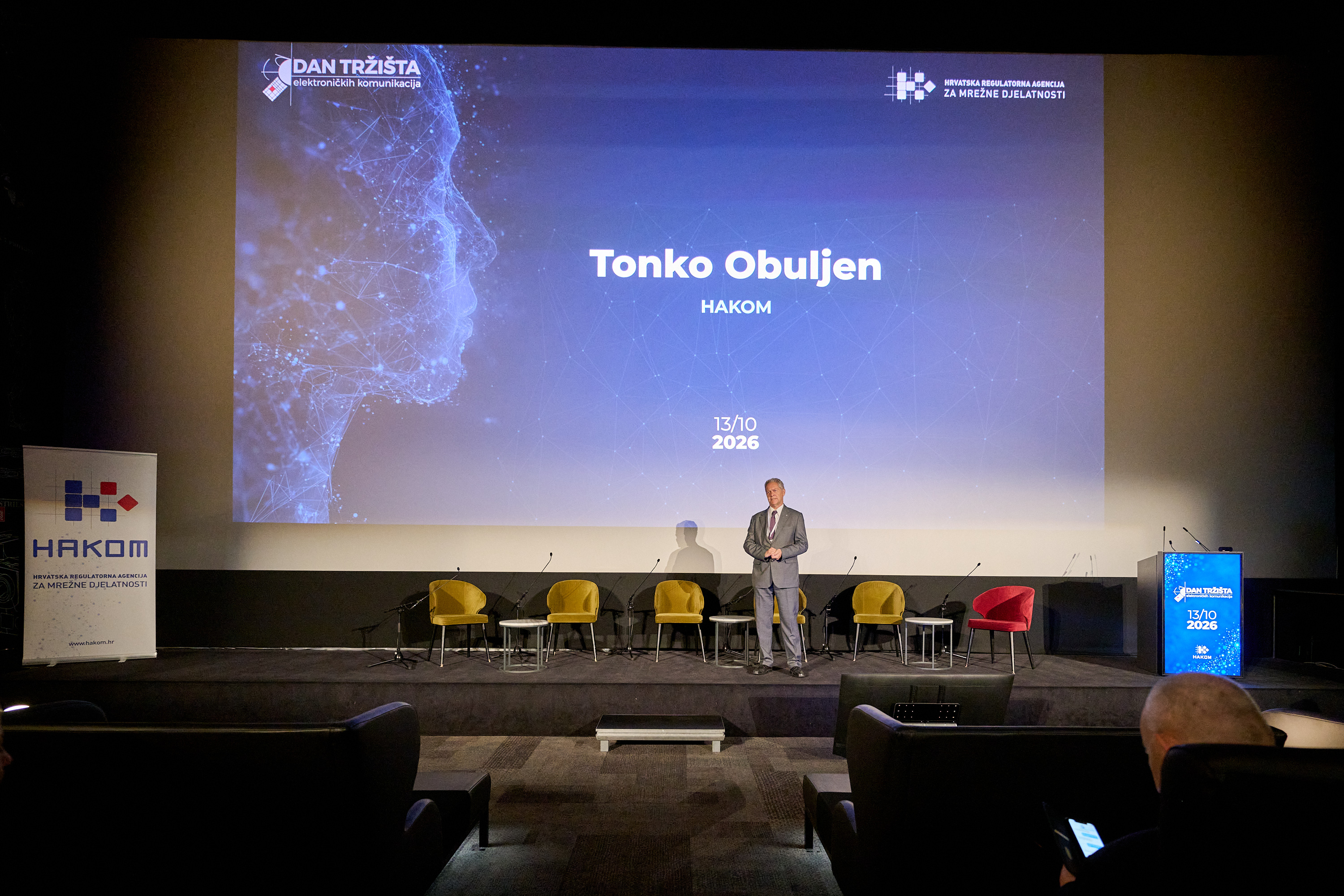
Tonko Obuljen, President of the HAKOM Council, emphasised the importance of ongoing dialogue among all market stakeholders to ensure the continued development of electronic communications, investment in infrastructure, and a high level of consumer protection. He thanked operators for their continued investment in networks, their commitment to cybersecurity and network security, and their efforts to strengthen the resilience of communications infrastructure. “Resilience and security come at a cost. That is why security investments must be approached thoughtfully, ensuring that the measures we take are based on risk assessments and that we achieve the highest possible level of security and resilience with the resources available,” Obuljen stated. He also noted that HAKOM expects to take on a wide range of additional responsibilities in areas closely related to electronic communications, where these communications are fundamental to HAKOM’s ability to assume such responsibilities. These include regulatory tasks related to the Artificial Intelligence Act, the Data Act, and the Cyber Resilience Act.
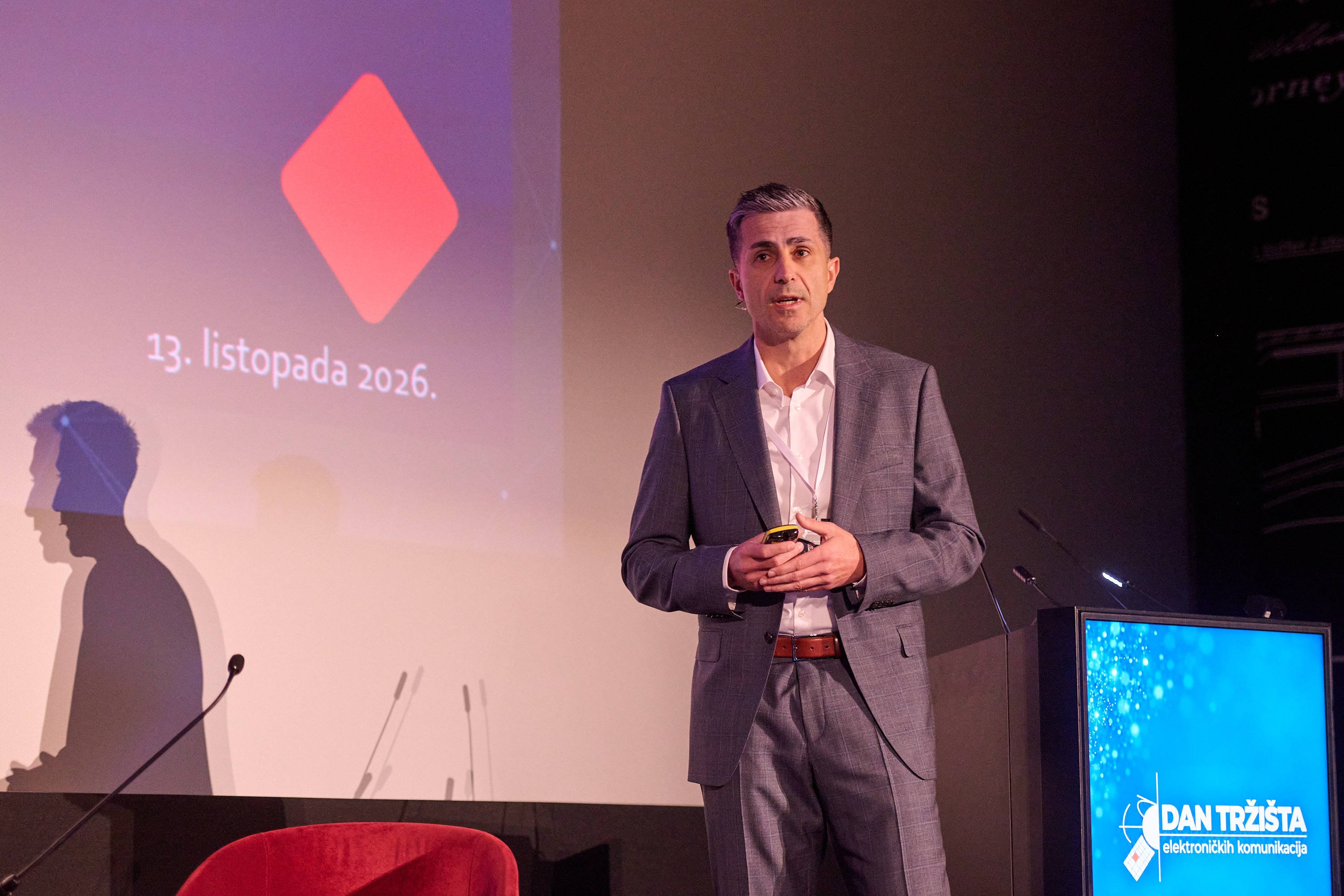
Following the opening remarks, Ivan Gilja of HAKOM presented the latest indicators of the state of the electronic communications market in Croatia, along with current trends shaping its future development.
Consumer Rights, Pricing and the Future of Networks
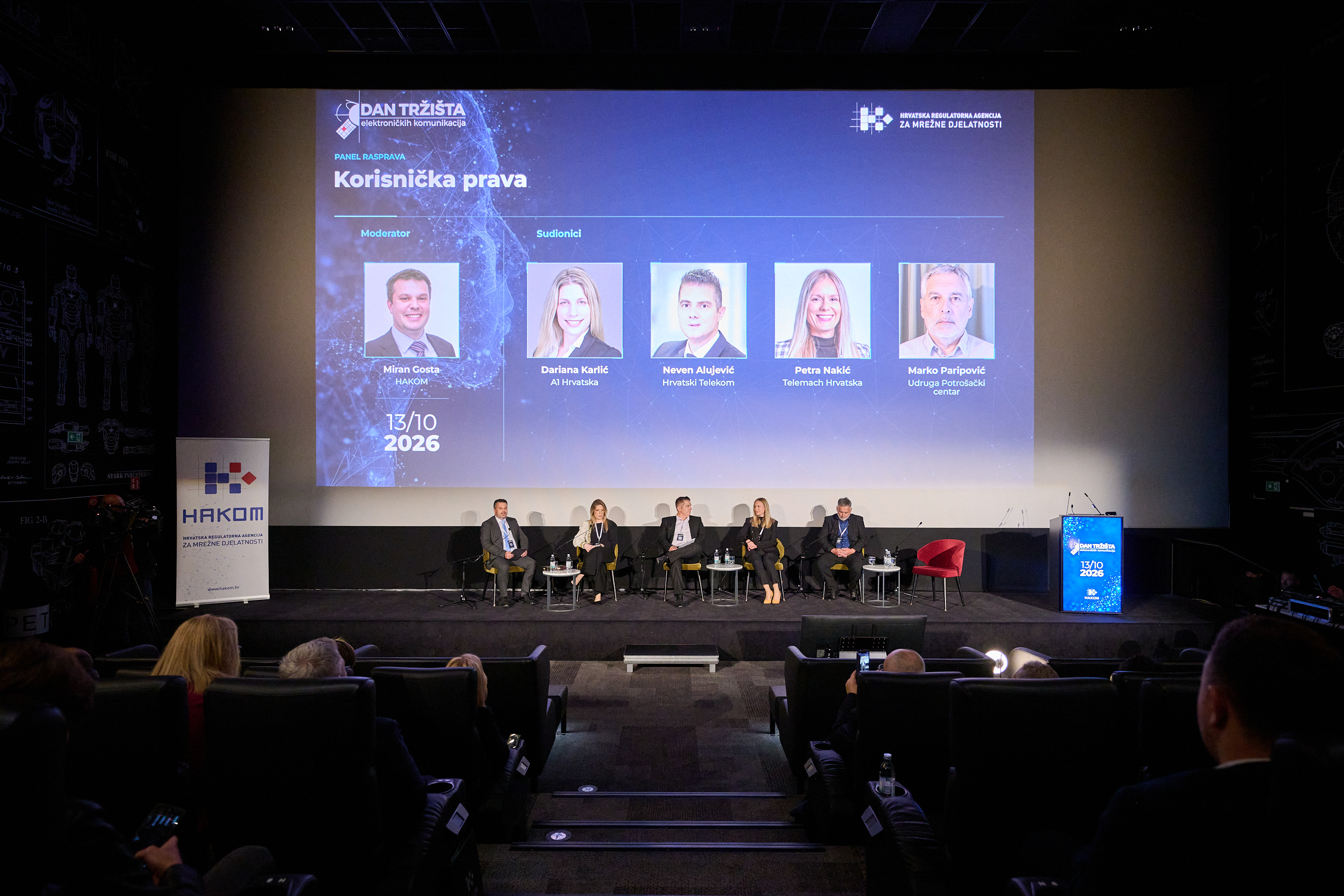
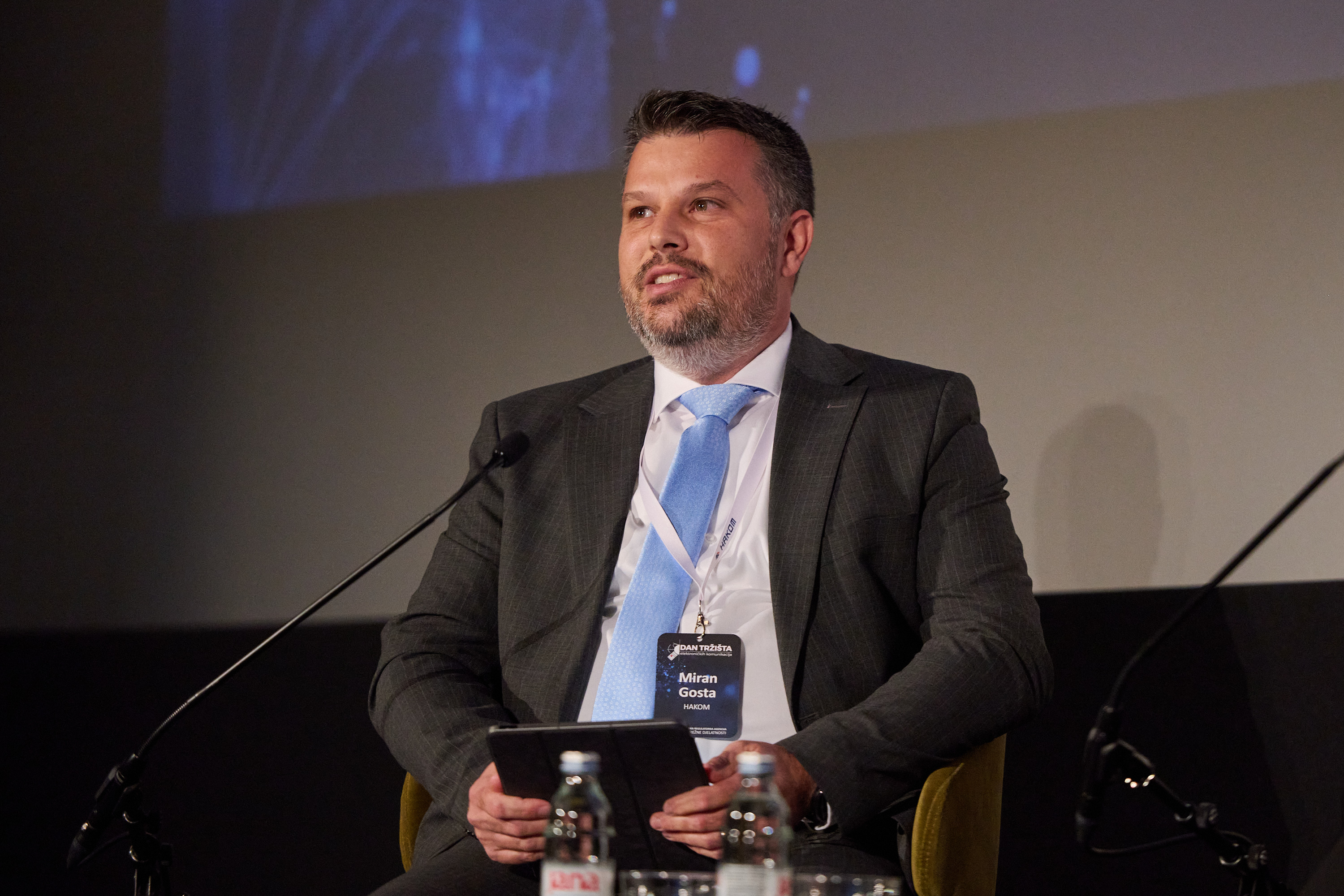
Consumer rights were one of the conference’s central topics. The panel discussion was moderated by Miran Gosta, Director of HAKOM, and featured Dariana Karlić (A1), Neven Alujević (HT), Petra Nakić (Telemach) and Marko Paripović (Potrošački centar, a consumer association).The participants discussed the transparency of contractual terms, pricing, service quality, contract termination procedures, and the challenges arising from differences between advertised and actual internet access speeds. They emphasised the importance of clear and timely communication with customers, as well as the continued improvement of service quality and consumer protection. Operator representatives also presented examples of good practice. Telemach highlighted the challenges of using mobile services in border areas and introduced an option allowing customers to prevent their devices from automatically connecting to foreign networks. Hrvatski Telekom presented a technical solution that resulted in a reduction of more than 30 per cent in the number of complaints, while A1 Hrvatska showcased a virtual assistant designed to speed up the resolution of customer enquiries and technical issues. The panel also addressed price indexation and sales representatives’ offers, which can often be misleading. An interesting proposal came from the consumer association: HAKOM could provide training for sales representatives before they begin their duties. The discussion also highlighted the importance of shared responsibility, noting that customers often fail to read their contracts carefully. The most important rights that consumers should be able to exercise include the freedom to choose their services and operator, the right to guaranteed service quality, access to education and information, and—when their choice of service provider fails to meet expectations—the right to lodge a complaint.
What Will the European Digital Networks Act Bring?
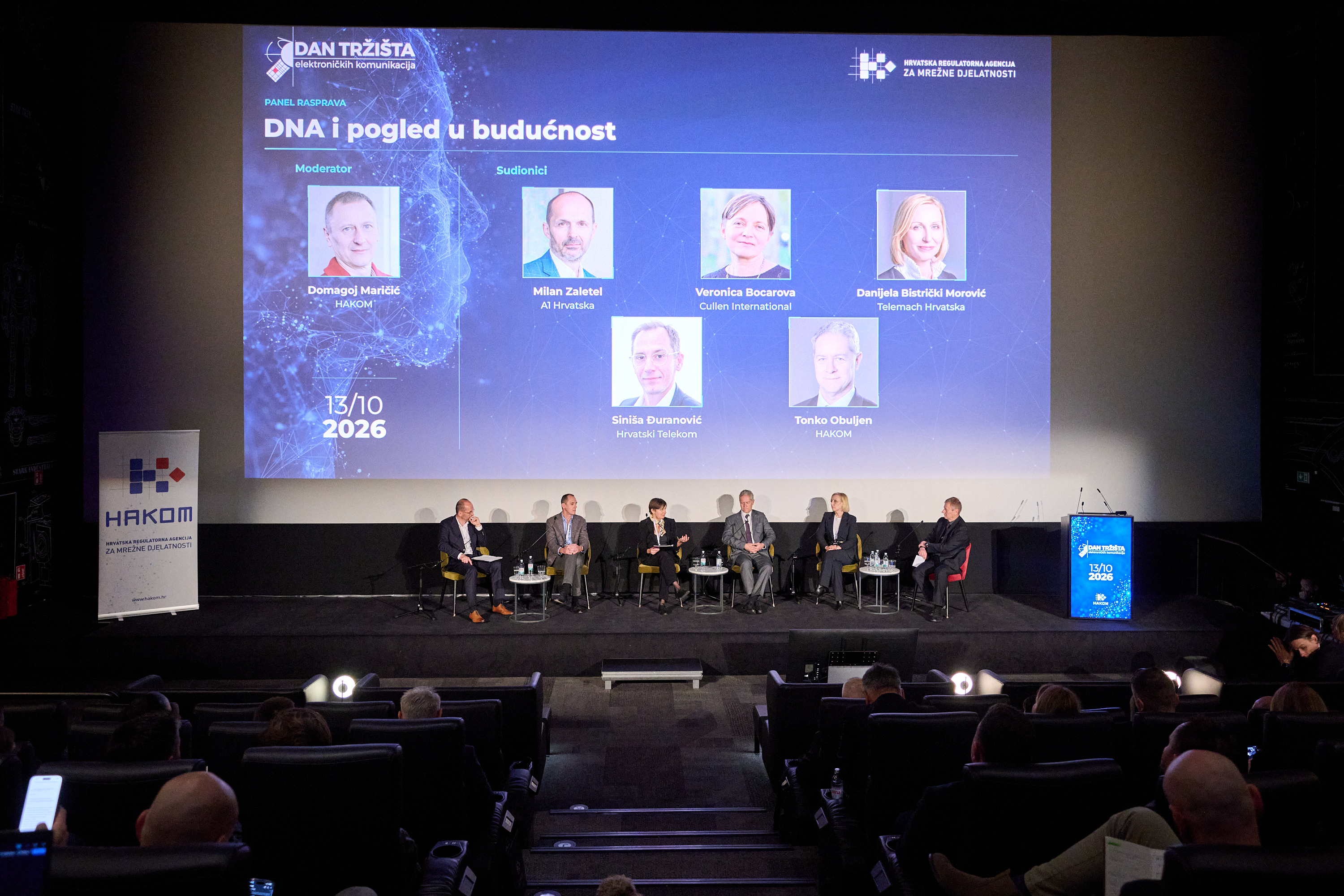
Particular attention was drawn to a panel discussion on the proposed European Digital Networks Act (DNA) and its potential impact on the electronic communications market. The discussion was moderated by Domagoj Maričić (HAKOM) and featured Milan Zaletel (A1), Veronica Bocarova (Cullen International), Tonko Obuljen (HAKOM), Siniša Đuranović (HT) and Danijela Bistrički Morović (Telemach).Veronica Bocarova outlined the legislative process for adopting the Regulation, emphasising that the proposal is proceeding through the ordinary legislative procedure and that discussions on amendments and negotiating positions are currently underway. The final positions of the EU institutions are expected in 2027, while the final text could be adopted in early 2028. Once adopted, the Regulation would apply directly in all EU Member States without the need to transpose its provisions into national legislation.
Tonko Obuljen discussed the positions of BEREC and HAKOM, highlighting significant differences between the approaches of the European Commission and BEREC, particularly in the area of radio spectrum management. He stressed that uniform solutions and deadlines may not be suitable for all Member States, given the substantial differences between national markets. For some countries, a particular deadline could be unattainable from the outset. Another concern is the possibility of restricting the use of infrastructure by operators that have already invested in and built different types of networks. Europe needs to strengthen its sovereignty and global competitiveness. However, it is also important to consider what kind of society we want to be and how far we want to go in pursuing these objectives. Competitiveness can also be built on strong and effective market competition, rather than necessarily encouraging consolidation, which is already occurring as a natural market process. Obuljen noted that HAKOM actively participates in BEREC’s activities and seeks to ensure that its positions are represented in as many relevant forums as possible.
The panel provided an opportunity to exchange views on the future regulatory framework, the competitiveness of the European market and the investment needed in digital infrastructure. Particular attention was also given to the potential impact of the proposed new rules on operators and consumers in Croatia.
Price Attracts Customers, but It Is Not What Keeps Them in the Long Term
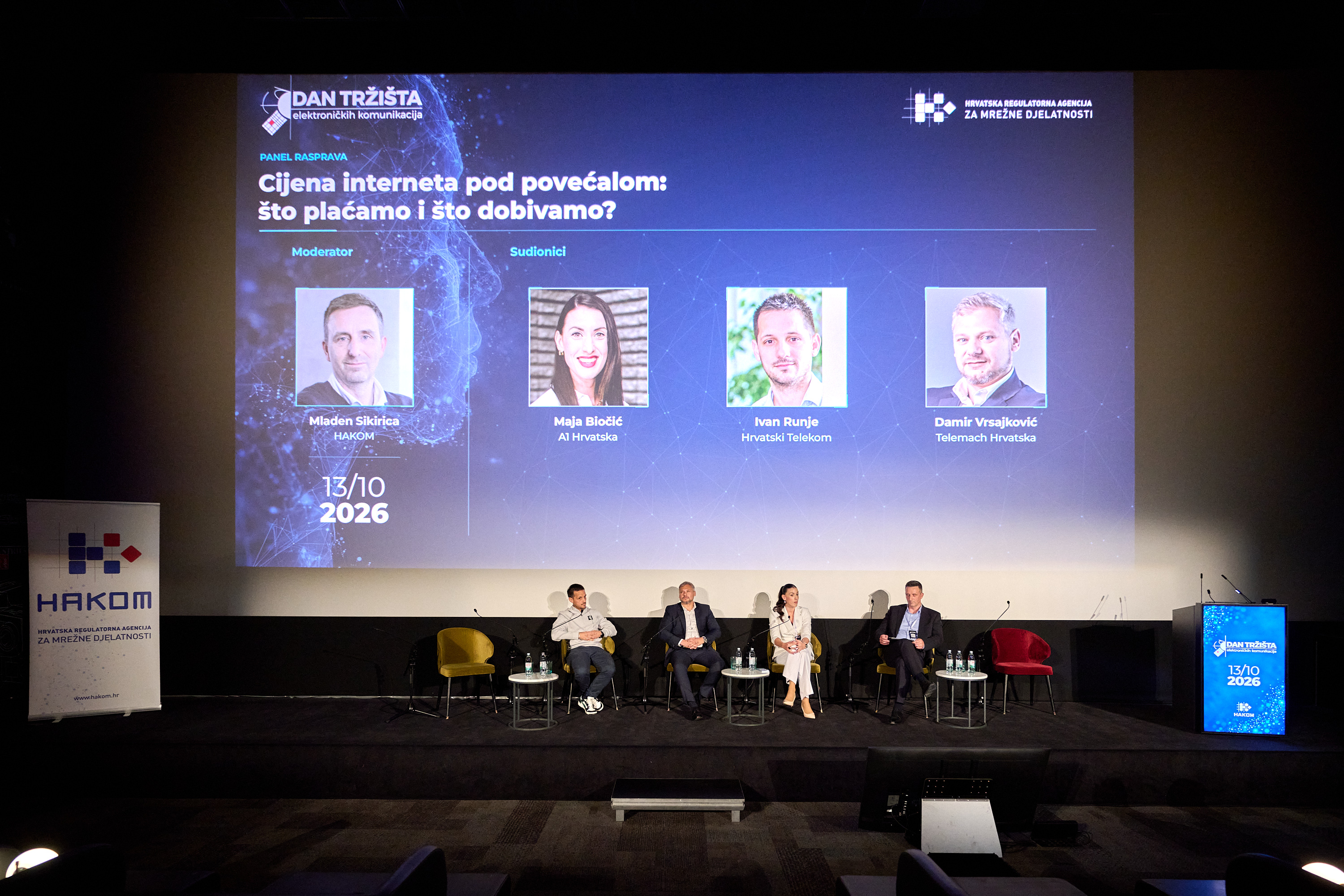
The next session focused on retail prices for broadband internet access, the relationship between price and service quality, and the impact of market conditions and macroeconomic factors on future price trends. The topic was discussed by Maja Biočić (A1), Ivan Runje (HT) and Damir Vrsajković (Telemach), with Mladen Sikirica (HAKOM) moderating the discussion. The participants agreed that maintaining a balance between network investment, market competition and affordable prices is essential for the continued development of a digital society.
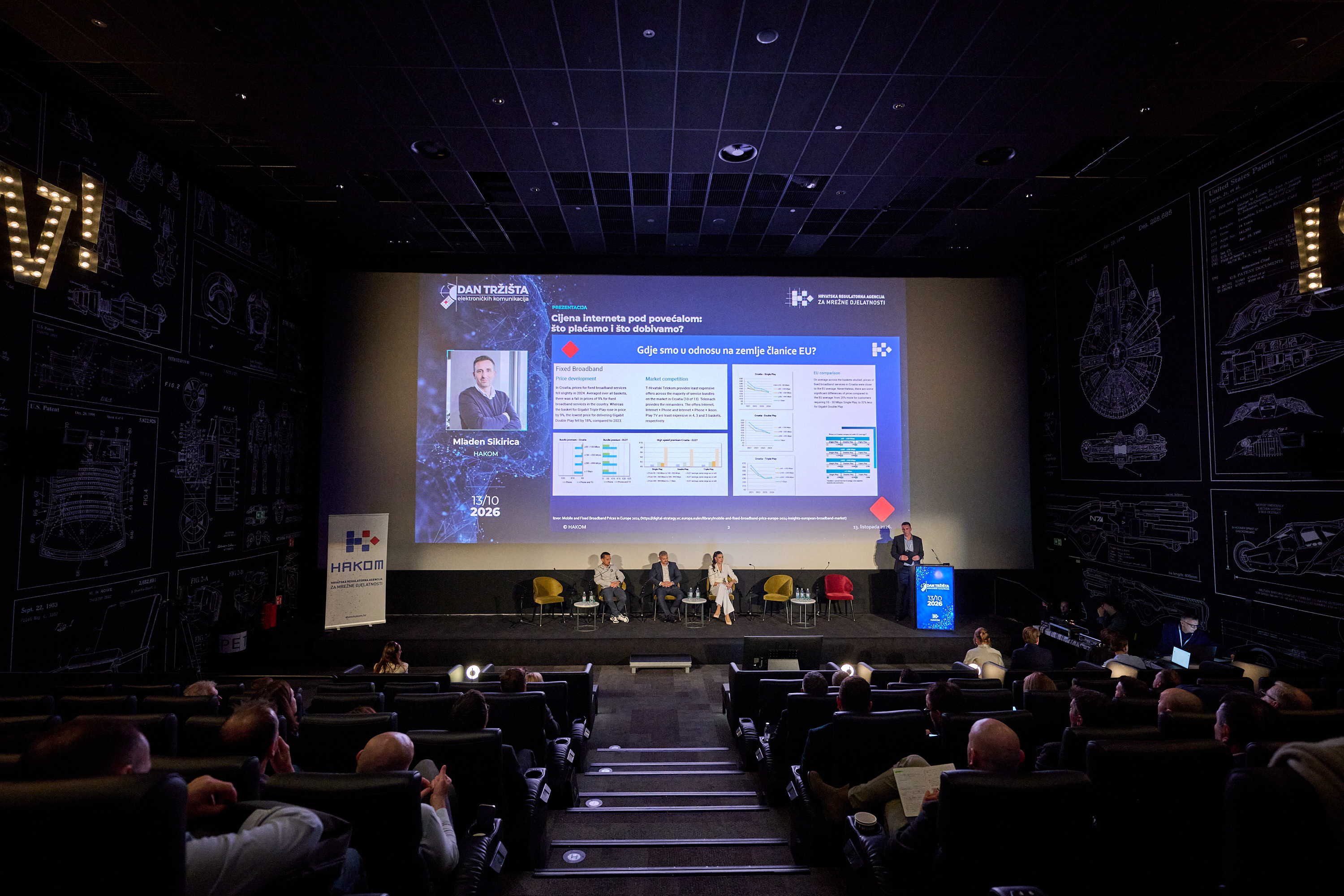
The prices of services offered by operators to end users are determined by the market. HAKOM’s role is to monitor market conditions and provide a regulatory framework that protects and promotes competition, encourages investment, ensures service availability and safeguards users’ rights.The European Commission has published a study comparing the prices of broadband internet access services—the most important and widely used electronic communications services—across EU Member States. Mladen Sikirica presented the findings, noting that prices in Croatia are below the EU average for most of the packages analysed. HAKOM had not previously monitored service prices systematically. However, recognising the need for such analyses, it developed a methodology last year for collecting and processing price data. Data have so far been collected for three quarterly periods, and the results are due to be published in October. Going forward, the results will be published regularly every six months.
Operator representatives highlighted that prices are primarily influenced by the costs of network construction and maintenance, infrastructure investment, ongoing network upgrades, energy, equipment, information security and wholesale charges. Some of these costs are directly within operators’ control, and they seek to optimise them through process automation and more efficient network management. However, operators have limited influence over many other costs. Operators continue to invest in improving the customer experience, and users recognise the value of these investments through service quality and reliability. Although price is often a key factor when customers choose an operator, the panel emphasised that it is not the decisive factor in retaining customers over the long term. What matters most to users is that services are delivered in accordance with the terms agreed upon and communicated to them. While price was once the primary criterion when choosing a provider, customers increasingly value high-quality customer support, service reliability, responsiveness and low latency.
Five Years of 5G in Croatia
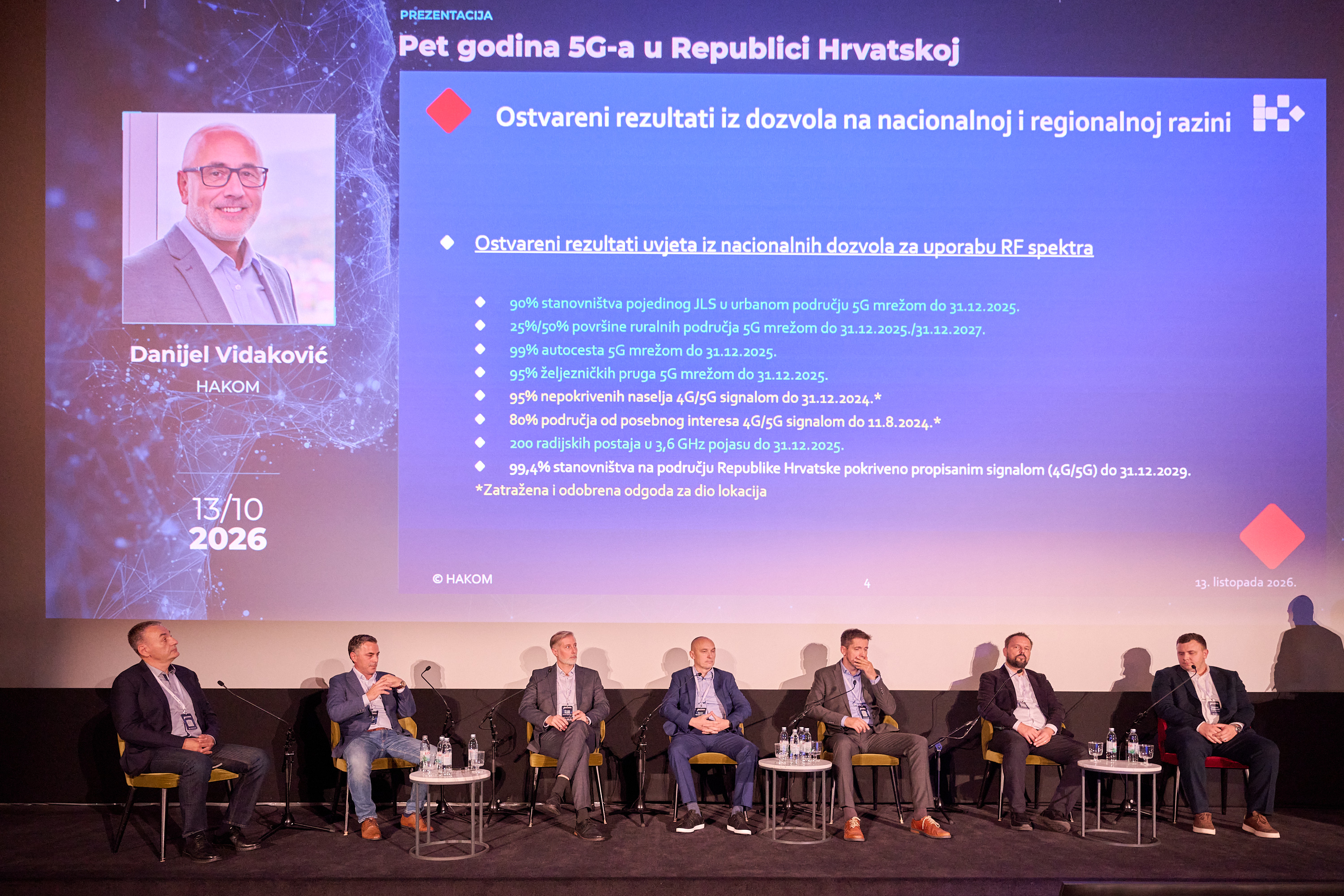
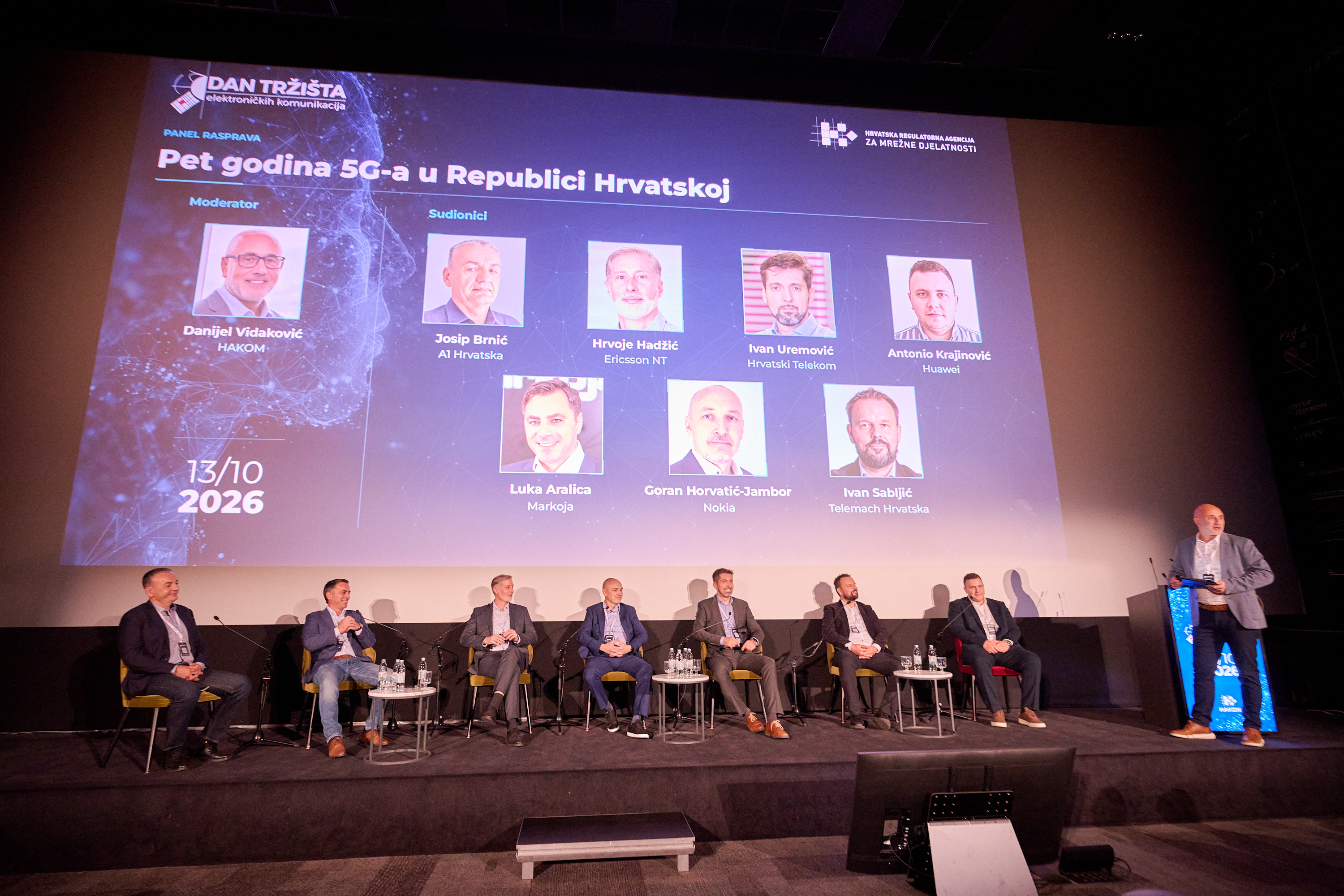
The closing panel focused on the introduction of 5G technology in Croatia. Representatives of national and regional operators, as well as equipment manufacturers, reviewed the results of the implementation and development of 5G networks over the past five years
They also shared their perspectives on the opportunities arising from the further development and deployment of standalone 5G networks (5G SA), private 5G networks, and new technological concepts for integration with non-terrestrial networks (NTN), particularly satellite networks, which further expand the potential applications of 5G technology. The panel discussion featured Josip Brnić (A1), Hrvoje Hadžić (Ericsson NT), Ivan Uremović (HT), Antonio Krajinović (Huawei), Luka Aralica (Markoja), Goran Horvatić-Jambor (Nokia) and Ivan Sabljić (Telemach). The final panel was moderated by Danijel Vidaković (HAKOM), who opened the session with a brief overview of the activities undertaken and results achieved since the introduction of 5G technology to date. The Market Day event once again confirmed the importance of open dialogue between the regulator, operators, industry and users. It also provided a platform for exchanging views on key issues that will shape the future of electronic communications in the Republic of Croatia.
Gallery

For additional information please contact:
Croatian Regulatory Authority for Network Industries (HAKOM)
- Roberta Frangeša-Mihanovića 9 Street
- 10110 Zagreb, Croatia
- Tel. + 385 (0) 1 700 70 07
- Fax + 385 (0)1 700 70 70
Media inquiries can be submitted online using HAKOM’s official website: www.hakom.hr
About Hakom
HAKOM - Croatian Regulatory Authority for Network Industries – ensures preconditions for a fair market competition, stable growth and environment for innovations in the electronic communications and postal services market. HAKOM protects users’ interests and the possibility of choice among various communications and postal services at affordable prices, defines sustainable competitive conditions for operators and service providers under fair conditions for return on investment, and provides support to economic growth, public services and the quality of life in the Republic of Croatia by using modern technologies. HAKOM’ strategic goals are: to promote regulation of the electronic communications and postal services market, to support growth of investments and innovations in the electronic communications and postal services market, to provide efficient use of limited resources, to accelerate the growth of broadband products and services, to provide affordable offers of communications and postal services, to provide protection and informing of users, to build an efficient and comprehensive information system, to define and implement efficient processes, and to acquire multi-disciplinary expertise in market regulation.