HAKOM DSA Forum: User Rights, Platform Accountability and Child Protection at the Heart of Discussions
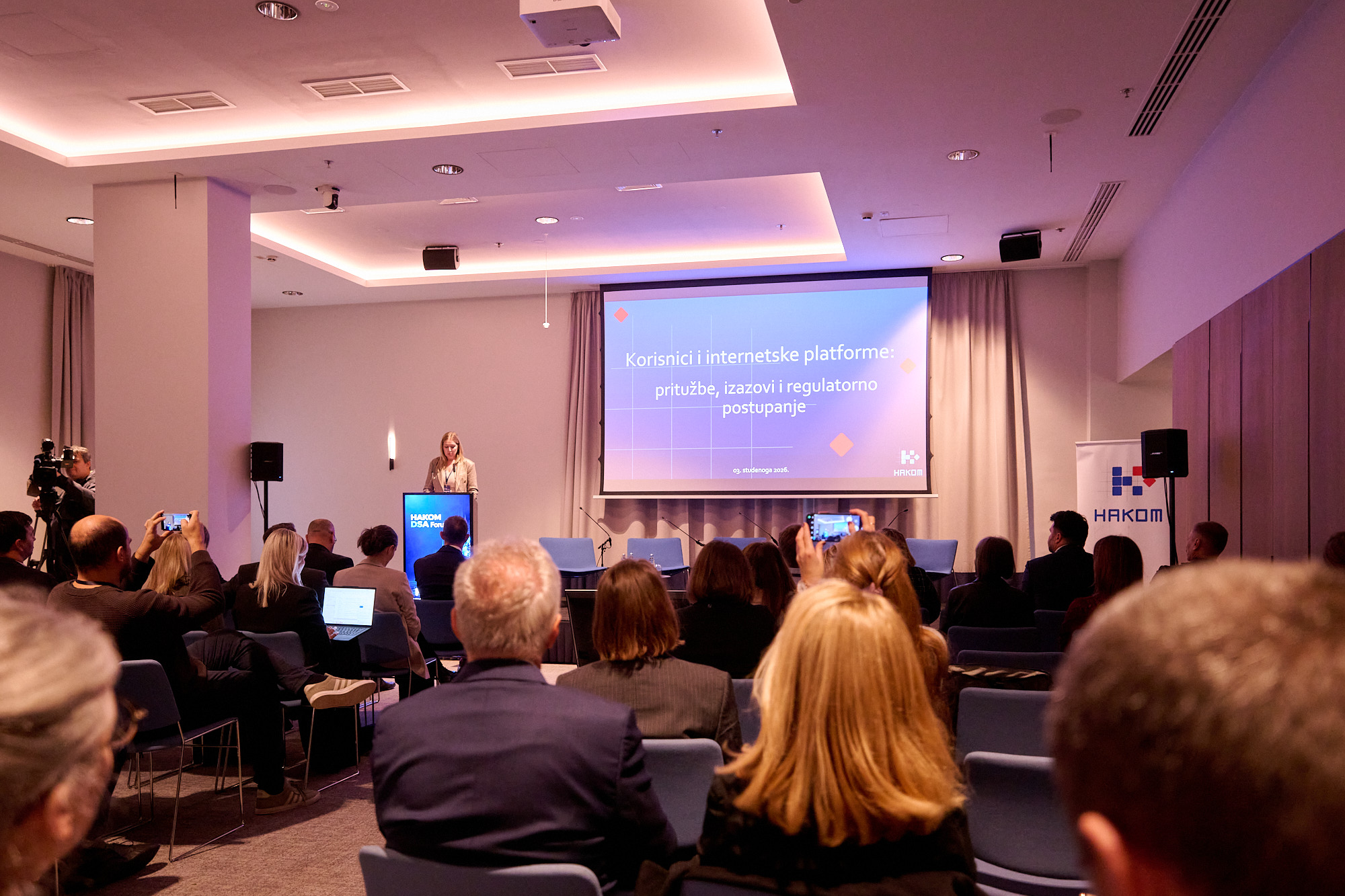
ZAGREB, 3 November 2026 - The first HAKOM DSA Forum, organised by the Croatian Regulatory Authority for Network Industries (HAKOM), Croatia’s Digital Services Coordinator, was held in Zagreb. The Forum brought together representatives of the European Commission, national regulatory authorities and government bodies, online platforms, industry and civil society to exchange experiences on the implementation of the Digital Services Act (DSA).
Discussions focused on experience gained to date in implementing the DSA, the accountability of digital service providers and the mechanisms available to protect users. Particular attention was devoted to the protection of children and young people and the challenges involved in creating a safer digital environment.
The success of the DSA must be measured by tangible results
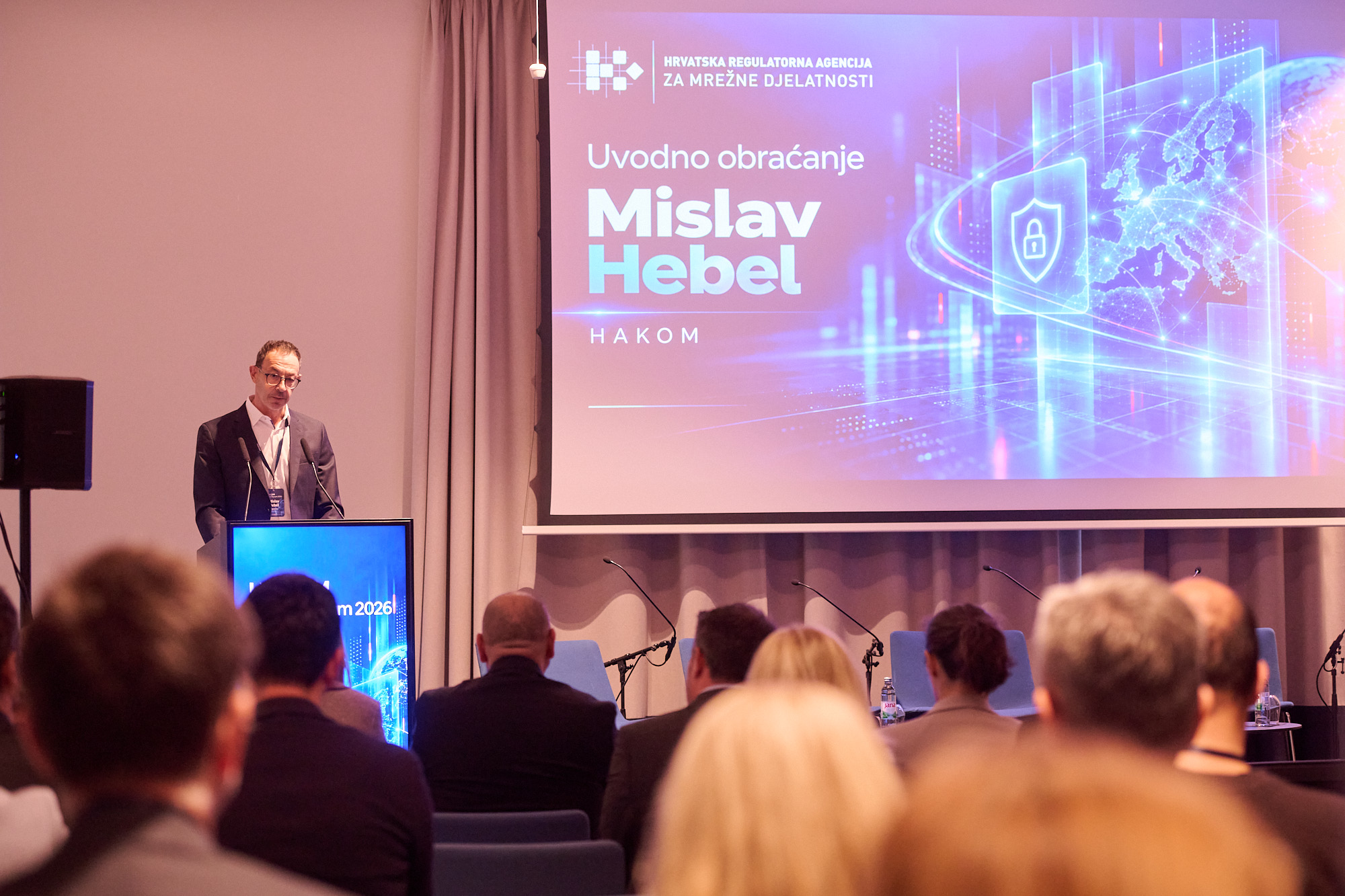
In his opening speech, Mislav Hebel, Deputy President of the HAKOM Council and representative of Croatia’s Digital Services Coordinator on the European Board for Digital Services (EBDS), stressed that the effectiveness of DSA implementation must be assessed in terms of tangible results and the actual protection of users’ rights.
“The success of the DSA will not be measured solely by the number of proceedings initiated, but above all by tangible results - more responsible conduct on the part of service providers and better protection for users,” Hebel emphasised.
He also highlighted the importance of maintaining a balance between the accountability of digital platforms, user safety and the protection of fundamental rights, including freedom of expression. He stressed that the DSA does not assign regulators the role of arbiters of truth or the task of determining which opinions are correct. Rather, it entrusts them with overseeing compliance by digital service providers with their prescribed obligations.
He particularly emphasised the responsibility of digital service providers to ensure children's safety from the outset, when designing their services, noting that protective measures must be proportionate, evidence-based and consistent with fundamental rights.
HAKOM received 205 user complaints in 2026
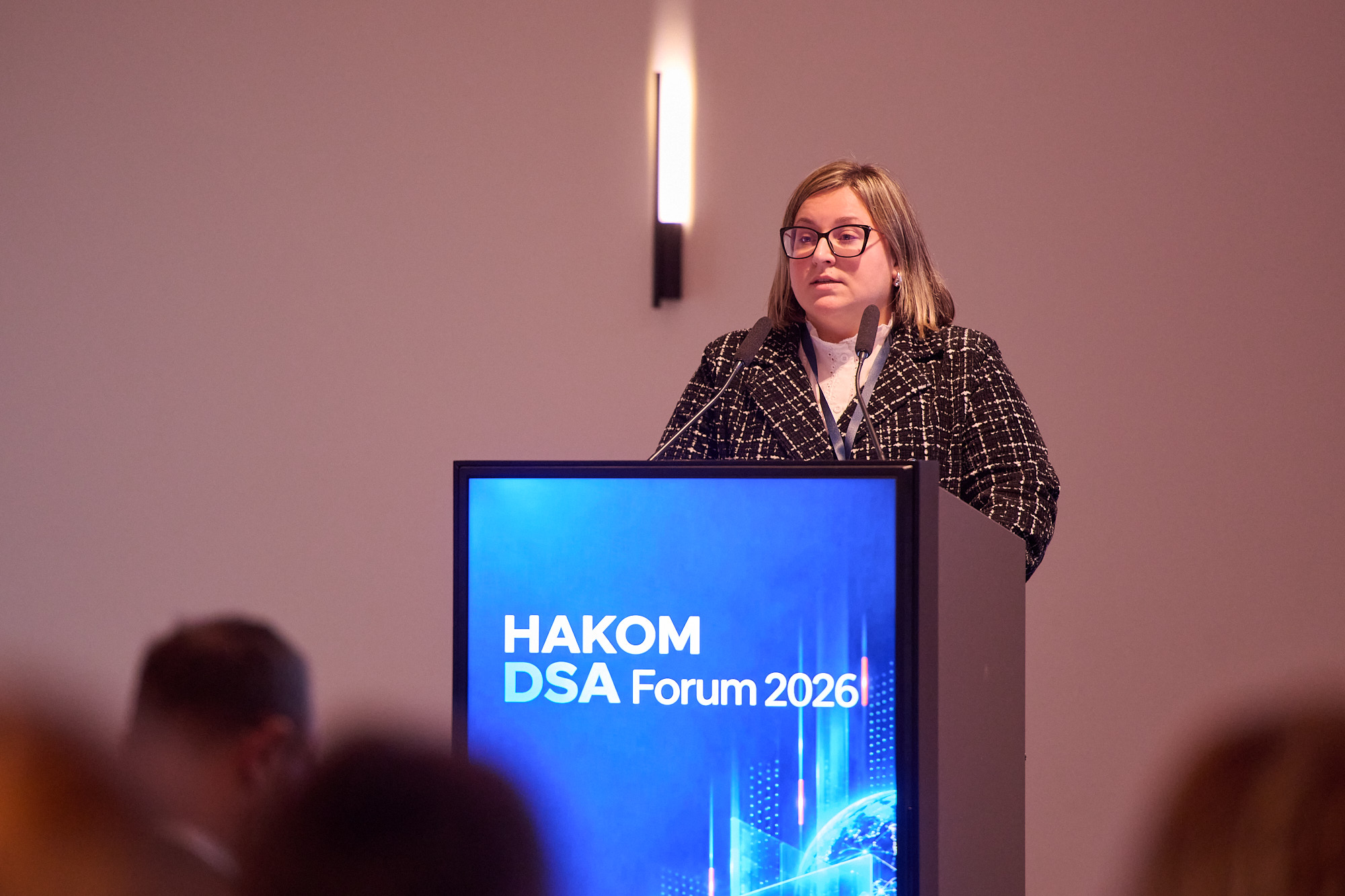
Nevenka Žiža presented HAKOM’s experience to date in implementing the DSA, outlining the complaints received, the mechanisms available for protecting users’ rights and the importance of cross-border regulatory cooperation. According to the data presented, HAKOM had received 205 complaints between the beginning of the year and early November. The most common complaints concerned the suspension or permanent disabling of user accounts, platforms’ handling of reports of content, and issues relating to online fraud and the financial aspects of using digital services.
“The DSA provides users with various avenues of redress, ranging from challenging decisions through platforms’ internal systems and out-of-court dispute settlement to submitting complaints to the regulator in cases of possible DSA infringements. Each of these mechanisms serves a specific purpose,” Žiža said. Users may submit complaints concerning possible breaches of obligations under the DSA, irrespective of the Member State in which the digital service provider is established. It is important, however, to distinguish such complaints from reports of illegal content. HAKOM examines complaints within the scope of its remit and, where necessary, forwards them to another competent authority or to the Digital Services Coordinator of another Member State.
European experience in overseeing the largest platforms
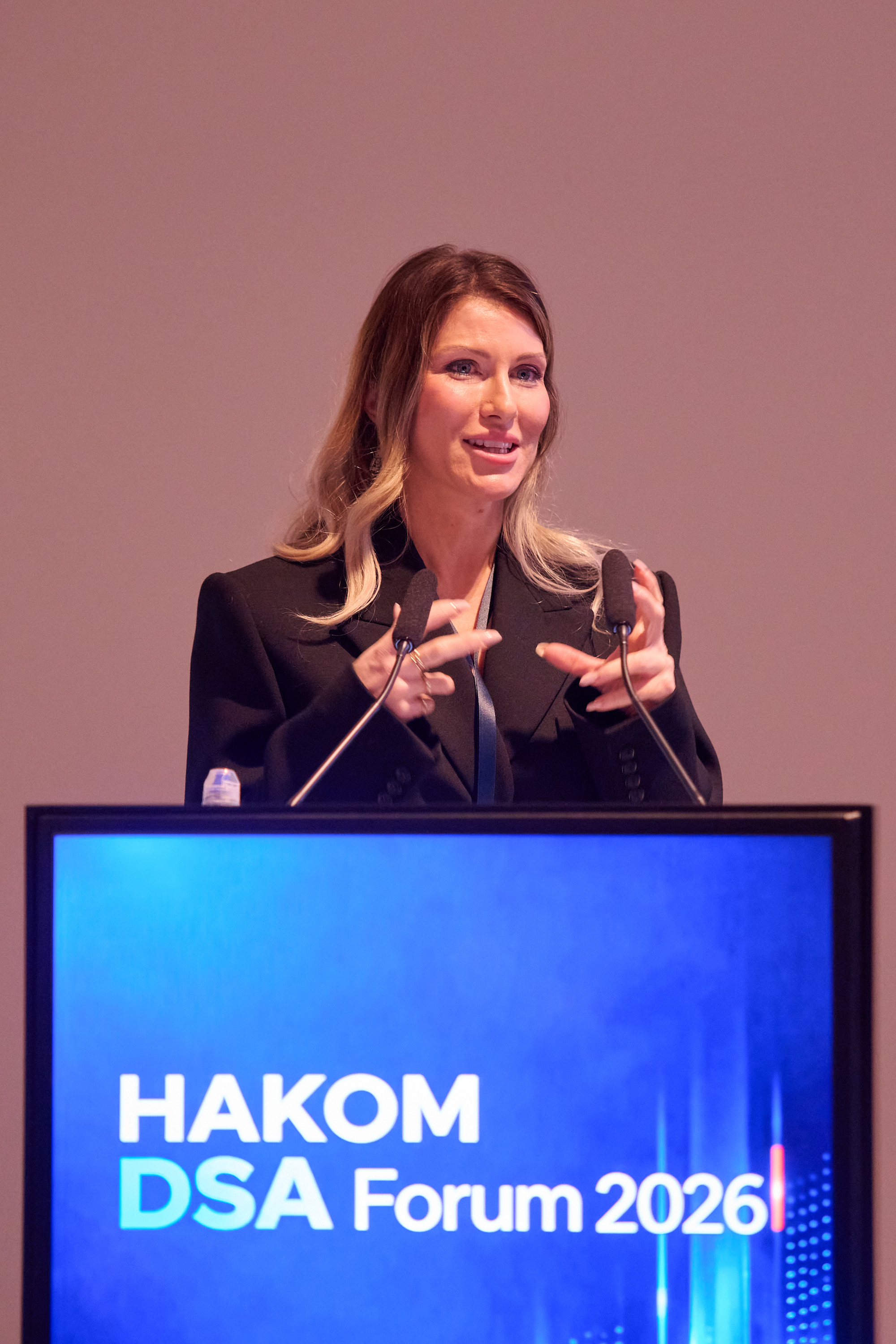
The European perspective on the implementation of the DSA was presented by Milana Brkić from the European Commission, who discussed the supervision of very large online platforms and search engines, as well as the Commission’s regulatory activities to date. Key areas of supervision highlighted included risk management, content moderation, transparency in advertising and recommender systems, consumer protection and access to data. An overview was also provided of the European Commission’s activities in enforcing the DSA, including formal proceedings, preliminary findings and decisions relating to compliance with the obligations laid down in the Act.
Trusted flaggers and the experience of Croatian platforms
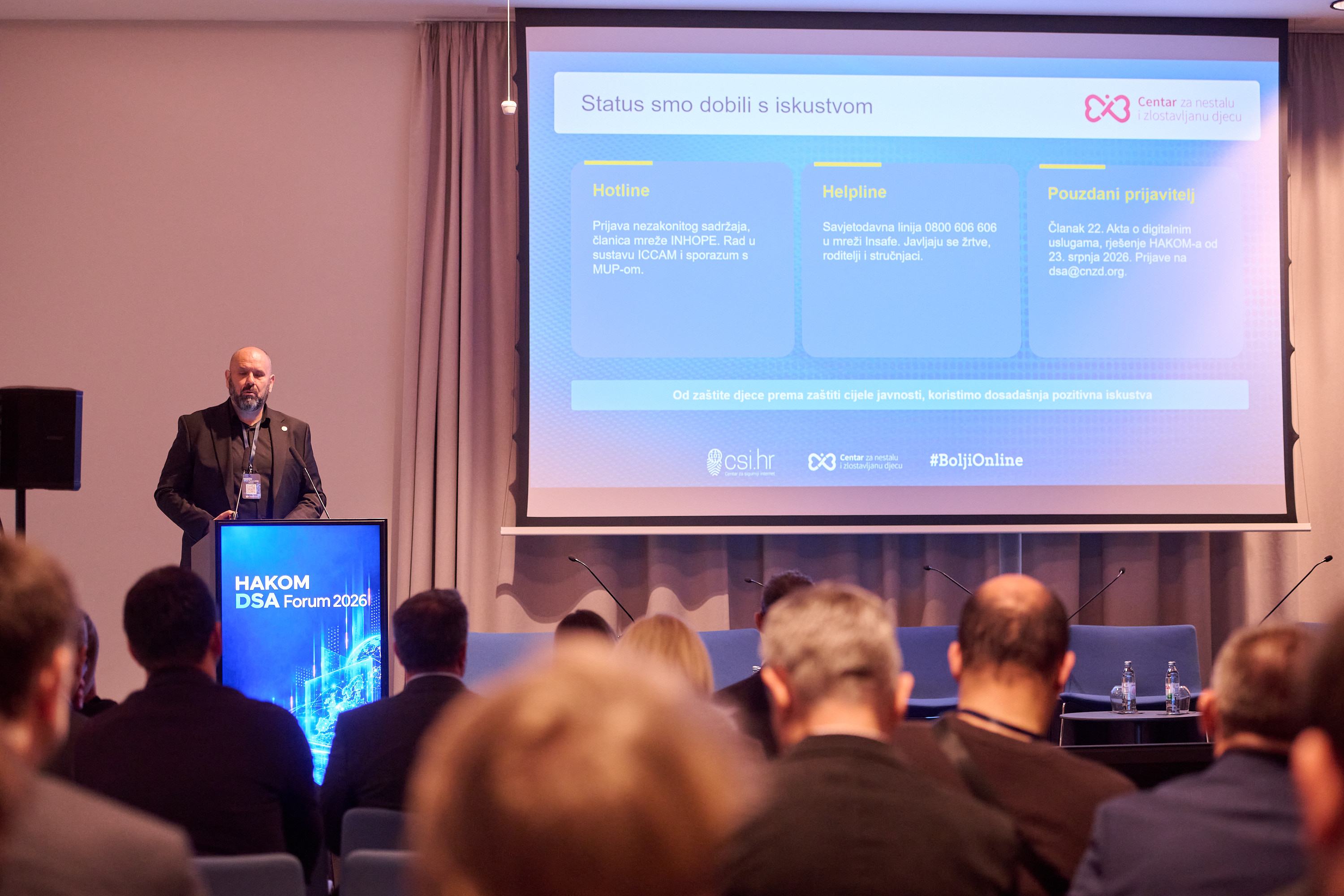
The role of trusted flaggers was discussed by Tomislav Ramljak from the Centre for Missing and Exploited Children (CNZD), Croatia’s first trusted flagger under the DSA. Trusted flagger status means that online platforms must give priority to notices concerning potentially illegal content submitted within the trusted flagger’s designated area of expertise and process them without undue delay.
“Our role is to identify and report illegal content, particularly content that threatens the safety and dignity of children, and to insist that platforms respond promptly,” Ramljak stated. He also drew attention to online scams, including fraudulent prize competitions and fake profiles, and highlighted the importance of educating users of all age groups about digital risks. The perspective of Croatian online platforms was presented by Jana Grašić from Njuškalo, who discussed the experience of adapting to DSA requirements, transparency in handling complaints and the importance of communication with users. “At Njuškalo, we take user feedback very seriously, as it forms the basis of all our adjustments, changes and development. Giving users a voice and showing them that we value their opinions is one of the greatest benefits we have been able to offer them as an online classifieds platform,” Grašić said.
Protecting Children and Young People Is a Shared Responsibility
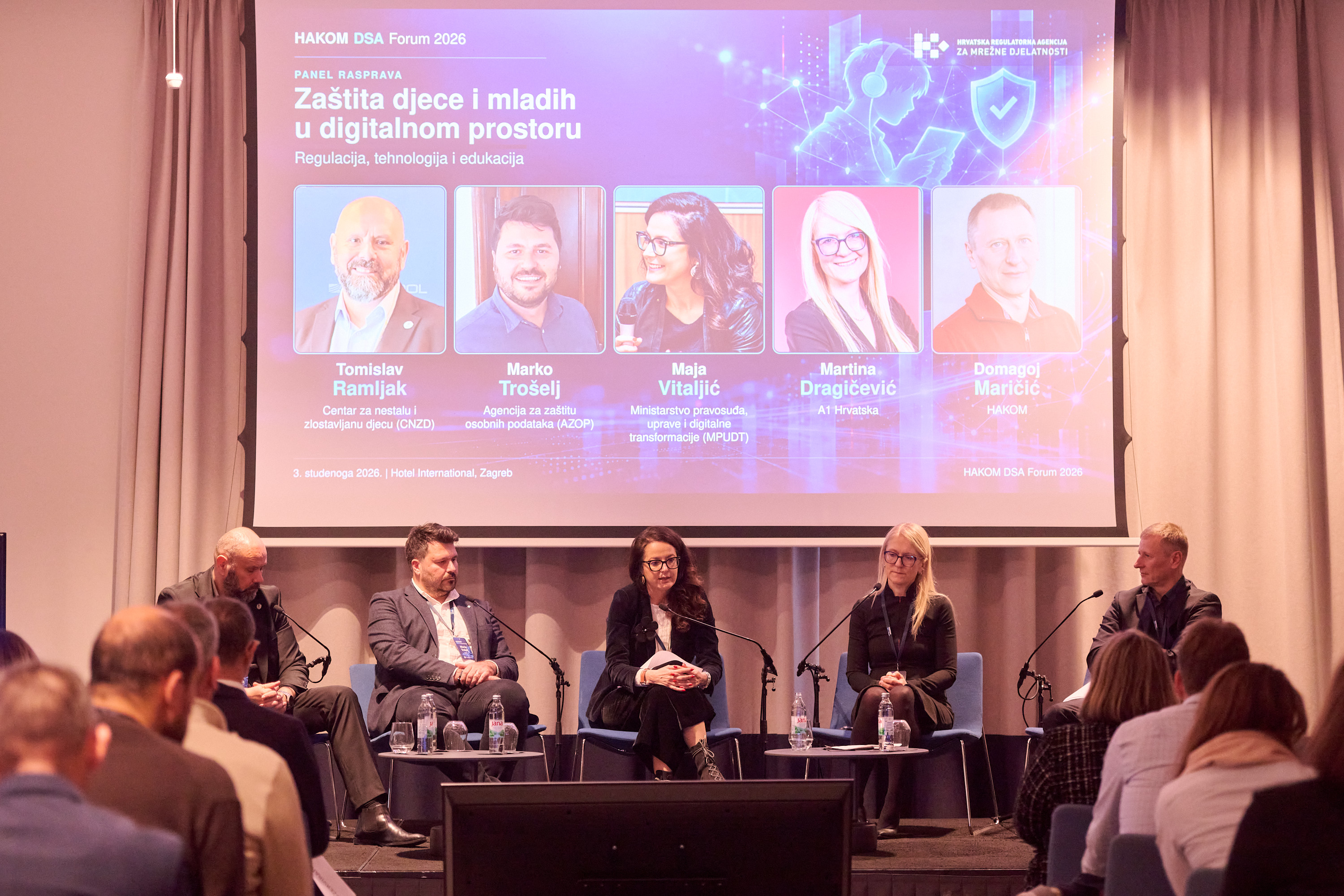
A dedicated section of the Forum focused on protecting children and young people in the digital environment and on the responsibilities of online platforms, regulators, educational institutions and parents. The panel discussion, entitled ‘Protecting Children and Young People in the Digital Environment - Regulation, Technology and Education’, featured Tomislav Ramljak (CNZD), Marko Trošelj (Croatian Personal Data Protection Agency), Maja Vitaljić (Ministry of Justice, Public Administration and Digital Transformation) and Martina Dragičević (A1 Croatia). The discussion was moderated by Domagoj Maričić, Deputy Director of HAKOM. Participants discussed the challenges of protecting minors on online platforms, the effectiveness of age restrictions on social media, and the importance of education and cooperation among all stakeholders. Particular attention was given to the responsibility of digital service providers to take children's safety into account from the very outset, when designing and developing their services. Open discussion is essential to creating a safer internet, which continues to evolve alongside technological and societal developments. The emergence of artificial intelligence has changed established patterns of online threats. For example, whereas girls were previously more frequently exposed to blackmail involving intimate photographs and similar content, boys are now increasingly becoming targets of blackmail, through various forms of manipulation and exploitation. Alongside legislative initiatives, it is therefore essential to maintain investment in prevention, education and awareness-raising. Taking account of available knowledge and emerging challenges, a safer digital environment must be developed systematically for children, young people and adults alike.
The first HAKOM DSA Forum provided an opportunity to exchange experiences on the implementation of the Digital Services Act in Croatia and across the European Union, while opening the door to further cooperation between regulatory authorities, online platforms, experts and civil society organisations. As emphasised at the opening of the Forum, the aim is for it to mark the beginning of an ongoing dialogue that will contribute to better regulatory practices and more effective protection of users' rights.
Gallery

For additional information please contact:
Croatian Regulatory Authority for Network Industries (HAKOM)
- Roberta Frangeša-Mihanovića 9 Street
- 10110 Zagreb, Croatia
- Tel. + 385 (0) 1 700 70 07
- Fax + 385 (0)1 700 70 70
Media inquiries can be submitted online using HAKOM’s official website: www.hakom.hr
About Hakom
HAKOM - Croatian Regulatory Authority for Network Industries – ensures preconditions for a fair market competition, stable growth and environment for innovations in the electronic communications and postal services market. HAKOM protects users’ interests and the possibility of choice among various communications and postal services at affordable prices, defines sustainable competitive conditions for operators and service providers under fair conditions for return on investment, and provides support to economic growth, public services and the quality of life in the Republic of Croatia by using modern technologies. HAKOM’ strategic goals are: to promote regulation of the electronic communications and postal services market, to support growth of investments and innovations in the electronic communications and postal services market, to provide efficient use of limited resources, to accelerate the growth of broadband products and services, to provide affordable offers of communications and postal services, to provide protection and informing of users, to build an efficient and comprehensive information system, to define and implement efficient processes, and to acquire multi-disciplinary expertise in market regulation.