Postal Services Market Day: Growth in e-commerce is reshaping the market and bringing new challenges
ZAGREB, 11 November 2026 - The Croatian Regulatory Authority for Network Industries (HAKOM) held its Postal Services Market Day, an annual conference bringing together market participants, the regulator and relevant institutions to exchange experience and discuss current developments in the sector. This year’s conference, entitled ‘The Postal Market: Balancing Growth and New Challenges’, focused on the changes driven by the growth of e-commerce, evolving user needs, and regulatory and security challenges.
Marko Jukić, Member of the HAKOM Council opened the Conference. In his opening remarks, he noted that emerging trends create opportunities for the development of the postal market, while new rules provide the framework for its operation and emerging risks highlight the importance of responsible business practices. He emphasised that the aim of development should not be merely to increase the volume of postal items, but also to provide higher-quality, safer and more reliable services and strengthen user trust.
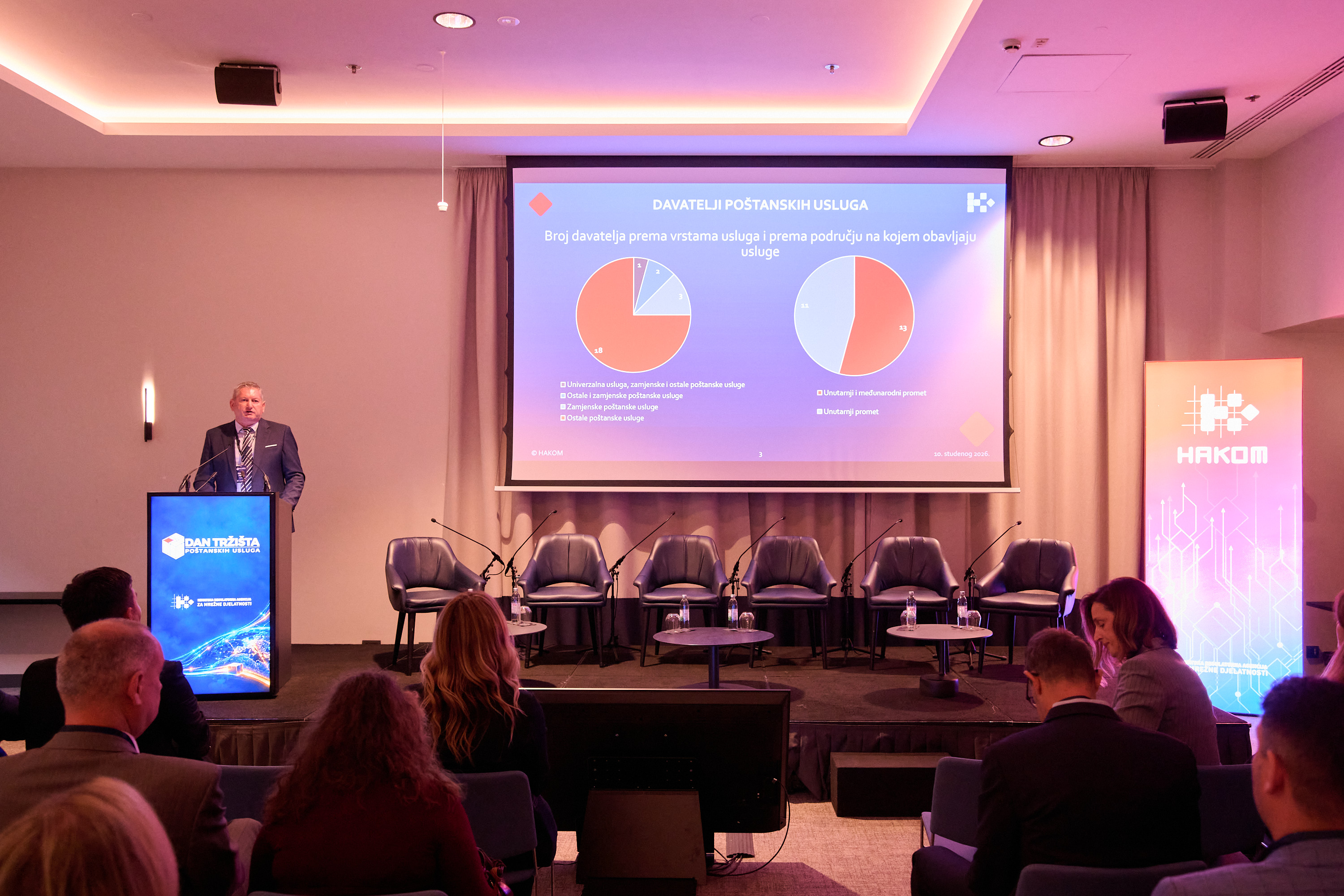
In the first technical session of the conference, Stjepan Paler from HAKOM presented key indicators, developments and trends in the postal services market.
‘The Croatian postal market is undergoing a major transformation. Traditional letter services are gradually declining, while parcel services, driven by the growth of e-commerce, are becoming the main engine of growth in the sector. The Croatian market largely follows European trends, with continued investment in logistics infrastructure, new delivery methods and services adapted to changing user habits,’ Paler concluded in his presentation of the market indicators.
Survey findings
Part of the conference was dedicated to business users of postal services. Marija Šimić from HAKOM presented the findings of the survey entitled ‘Business Users of Postal Services: What Has Changed Between 2023 and 2026?’
The survey shows that the needs of business users are changing: some postal communications are shifting to digital channels, while parcel lockers are becoming increasingly important. Delivery reliability remains the most important factor in the quality of postal services, with 92% of businesses considering it important, followed by delivery speed (86%) and national coverage (82%). The findings highlight the importance of adapting services to the different needs of business users, particularly in terms of delivery reliability, clarity of terms and conditions, and efficient problem resolution.
E-commerce, customs procedures and security
The growth of e-commerce has also raised a number of regulatory, customs-related and security issues. Domagoj Maričić from HAKOM spoke about online trading and the implementation of the Digital Services Act (DSA), focusing on the obligations of digital platforms and the challenges that the growth of e-commerce poses for the market.
‘The implementation of the Act to date has shown progress in tackling illegal products, to which the fines imposed by the European Commission have also contributed,’ Maričić emphasised.
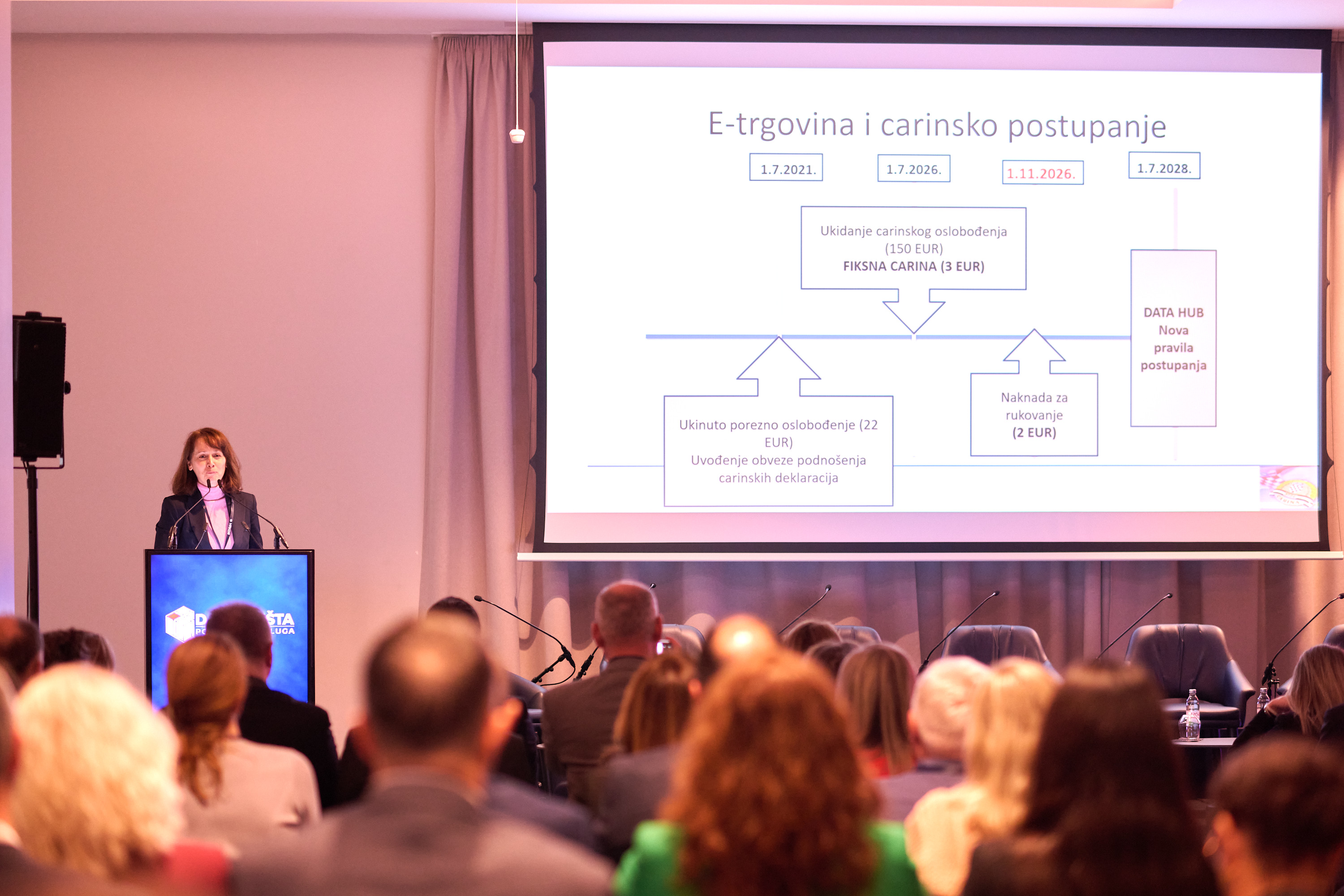
Melita Buljan from the Customs Administration presented changes to customs procedures in response to the growth of e-commerce. As of 1 July 2026, the customs duty relief for consignments valued at up to EUR 150 was abolished and a temporary customs duty of EUR 3 per item was introduced. As of 1 November 2026, a handling fee of EUR 2 per item was also introduced for e-commerce consignments imported from non-EU countries.
‘These measures mark the beginning of a broader modernisation of the EU customs system, aimed at ensuring a level playing field, more effective customs supervision and better control of goods entering the European Union market, Buljan pointed out.
She went on to outline further changes relating to the modernisation of the EU customs system, including the digitalisation of customs procedures, the establishment of a common customs data system, and greater responsibility for online platforms and other economic operators involved in the import of goods.
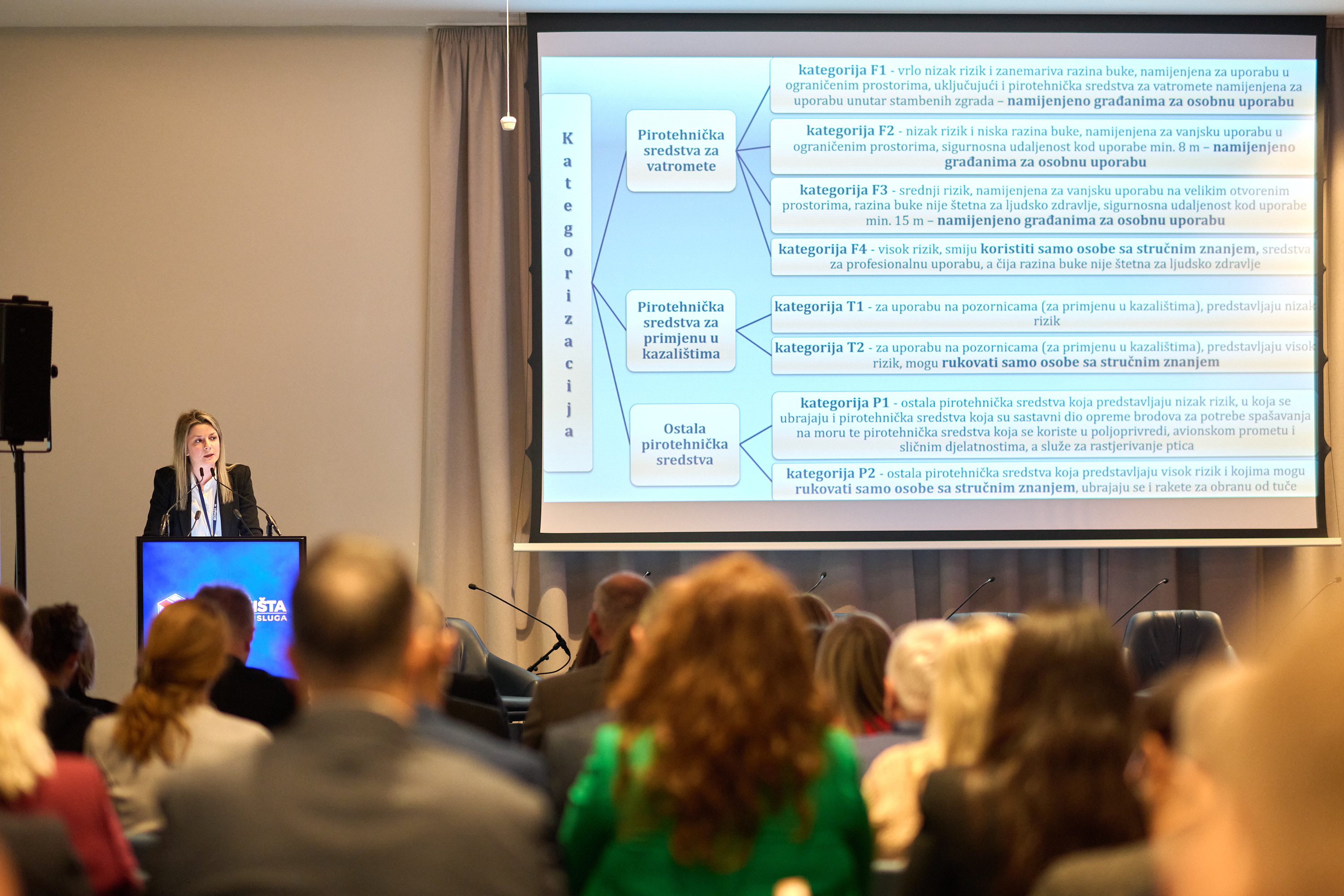
The security aspects of e-commerce and postal services were addressed by Katarina Vrabac from the Civil Protection Directorate of the Ministry of the Interior.
‘The security of postal items starts at the interfaces of digital platforms, where providing customers with timely information about prohibited contents plays a key role in prevention. Through cooperation between the Ministry of the Interior and postal service providers, we are creating a safer environment and preventing the misuse of postal services for the distribution of explosive substances and pyrotechnic articles,’ Vrabac stated.
Panel discussion
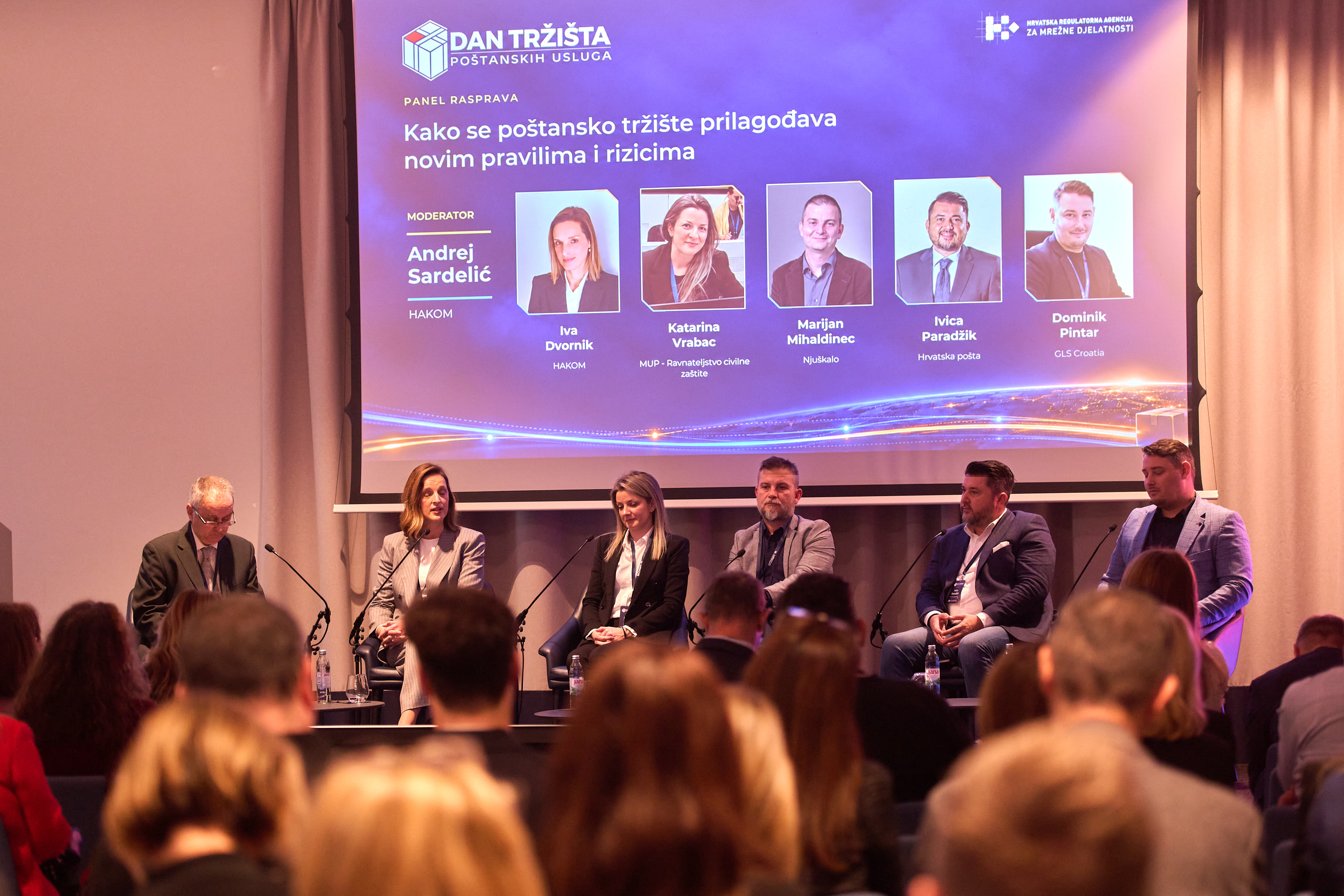
The central part of the conference was a panel discussion entitled ‘How Is the Postal Market Adapting to New Rules and Risks?’, moderated by Andrej Sardelić from HAKOM. The panellists were Katarina Vrabac from the Ministry of the Interior, Marijan Mihaldineç from Njuškalo, Ivica Paradžik from Hrvatska Pošta, Dominik Pintar from GLS Croatia and Iva Dvornik from HAKOM.
The panellists highlighted that the growth of e-commerce has changed not only the way postal services are provided, but also the relationships between market participants. Business and technological integration, clearly defined roles and responsibilities, and effective cooperation between stakeholders are becoming increasingly important for the functioning of the market, particularly when it comes to implementing new rules and ensuring the security of postal items.
Gallery



For additional information please contact:
Croatian Regulatory Authority for Network Industries (HAKOM)
- Roberta Frangeša-Mihanovića 9 Street
- 10110 Zagreb, Croatia
- Tel. + 385 (0) 1 700 70 07
- Fax + 385 (0)1 700 70 70
Media inquiries can be submitted online using HAKOM’s official website: www.hakom.hr
About Hakom
HAKOM - Croatian Regulatory Authority for Network Industries – ensures preconditions for a fair market competition, stable growth and environment for innovations in the electronic communications and postal services market. HAKOM protects users’ interests and the possibility of choice among various communications and postal services at affordable prices, defines sustainable competitive conditions for operators and service providers under fair conditions for return on investment, and provides support to economic growth, public services and the quality of life in the Republic of Croatia by using modern technologies. HAKOM’ strategic goals are: to promote regulation of the electronic communications and postal services market, to support growth of investments and innovations in the electronic communications and postal services market, to provide efficient use of limited resources, to accelerate the growth of broadband products and services, to provide affordable offers of communications and postal services, to provide protection and informing of users, to build an efficient and comprehensive information system, to define and implement efficient processes, and to acquire multi-disciplinary expertise in market regulation.